


Not for Developers who want to freely swap in Claude, Gemini or an arbitrary third-party model with zero config, or teams that need flat, predictable per-seat pricing rather than token-metered credits that can spike.
The facts, with their sources
What it does
- Writes code
- YesEdits files and runs local tooling against the working repository.
Work against your local repository: Let Codex inspect files, make edits, and run the tools already installed on your machine.
learn.chatgpt.com/docs/codex/cli - Debugs and fixes
- YesDocumented first-task workflow includes debugging an issue.
Describe what you want to accomplish. For example, ask Codex to explain the project, make a focused change, or help debug an issue.
learn.chatgpt.com/docs/codex/cli - Writes tests
- YesDocumented CLI workflow for writing a unit test for a named function.
Use this when you want to define the exact scope to test.
learn.chatgpt.com/docs/prompting - Reviews code
- Yes/review runs a dedicated reviewer over a diff, commit or branch without editing the tree.
Run a dedicated review against uncommitted changes, a commit, or a base branch. Codex reports prioritized findings without modifying your working…
learn.chatgpt.com/docs/codex/cli - Whole-codebase work
- PartlyDocumented for repository-wide exploration and multi-step plans; the vendor states no repo-wide migration guarantee.
This can be particularly helpful for complex tasks that are highly parallel, such as codebase exploration or implementing a multi-step feature plan.
learn.chatgpt.com/docs/agent-configurat… - Ships it
- PartlyLocally it stops at edits plus commands you allow; pull requests are opened from Codex cloud or the GitHub Action.
Create a PR directly from the cloud or pull changes locally to test and finish up.
learn.chatgpt.com/docs/prompting
How much it does unattended
- Runs autonomously
- YesApproval prompts can be switched off entirely, including a no-sandbox full-access mode.
You can disable approval prompts with --ask-for-approval never or -a never (shorthand).
learn.chatgpt.com/docs/agent-approvals-… - Multi-agent
- YesSpawns parallel subagents and consolidates their results; /agent switches between threads.
ChatGPT Work and Codex can run subagent workflows by spawning specialized agents in parallel and then collecting their results in one response.
learn.chatgpt.com/docs/agent-configurat… - Agent permissions
- YesOS-enforced sandbox with workspace-only writes, network off by default, and configurable approval policy.
Codex CLI / IDE extension: OS-level mechanisms enforce sandbox policies. Defaults include no network access and write permissions limited to the…
learn.chatgpt.com/docs/agent-approvals-…
Which models it runs on
- Claude
- NoSign-in and model support are OpenAI models only; no Anthropic model appears in any documented model list.
Codex supports two ways for a person to sign in when using OpenAI models:
learn.chatgpt.com/docs/auth - GPT
- YesGPT-5.6 Sol, Terra and Luna are all marked available in Codex CLI, selected with --model.
Codex offers three GPT-5.6 models: Sol for detail and polish, Terra as the everyday workhorse, and Luna for clear, repeatable work.
learn.chatgpt.com/docs/models - Open models
- Yes--oss runs Codex against a local Ollama or LM Studio provider.
Codex can run against a local "open source" provider such as Ollama or LM Studio when you pass --oss.
learn.chatgpt.com/docs/config-file/conf… - Model choice
- PartlyYou pick the model per run and can define custom providers, but the first-party catalogue is OpenAI models only.
A model provider defines how Codex connects to a model (base URL, wire API, authentication, and optional HTTP headers).
learn.chatgpt.com/docs/config-file/conf…
Where you use it
- In your editor
- YesA separate Codex IDE extension shares the same login and MCP configuration as the CLI.
The ChatGPT desktop app, Codex CLI, and IDE extension share this configuration. Once you configure your MCP servers, you can switch among those…
learn.chatgpt.com/docs/extend/mcp - On the command line
- YesThe terminal is the product's primary surface, installed via installer, npm or Homebrew.
Inspect code, make changes, run commands, and automate repeatable work without leaving your terminal.
learn.chatgpt.com/docs/codex/cli - In your pipeline
- Yescodex exec runs non-interactively in pipelines, with JSONL output and API-key or workload-identity auth.
Non-interactive mode lets you run Codex from scripts (for example, continuous integration (CI) jobs) without opening the interactive TUI.
learn.chatgpt.com/docs/non-interactive-… - In a browser
- YesCodex cloud is a hosted surface reachable from the browser and from the CLI via codex cloud.
Run tasks in isolated cloud environments, work in parallel, and start work from the web, GitHub, GitLab, Linear, or Slack.
learn.chatgpt.com/docs/cloud
Whose machine it runs on
- Self-hosted
- PartlyThe agent binary runs on your machine or runner; inference is OpenAI-hosted unless you route it through your own AWS Bedrock account.
When you configure a local ChatGPT Work or Codex surface with Amazon Bedrock as the model provider, the OpenAI-hosted Responses API isn't in the…
learn.chatgpt.com/docs/amazon-bedrock - Open source
- YesCLI, SDK and app server are in openai/codex; the IDE extension and Codex cloud are not open source.
OpenAI develops key parts of Codex in the open. That work lives on GitHub so you can follow progress, report issues, and contribute improvements.
learn.chatgpt.com/docs/open-source
What it costs to run
- How it meters
- YesPer-token consumption expressed as credits per 1M tokens on ChatGPT plans; API-key auth bills raw API tokens.
Usage is calculated in credits per million input tokens, cached input tokens, and output tokens.
learn.chatgpt.com/docs/pricing - Free tier
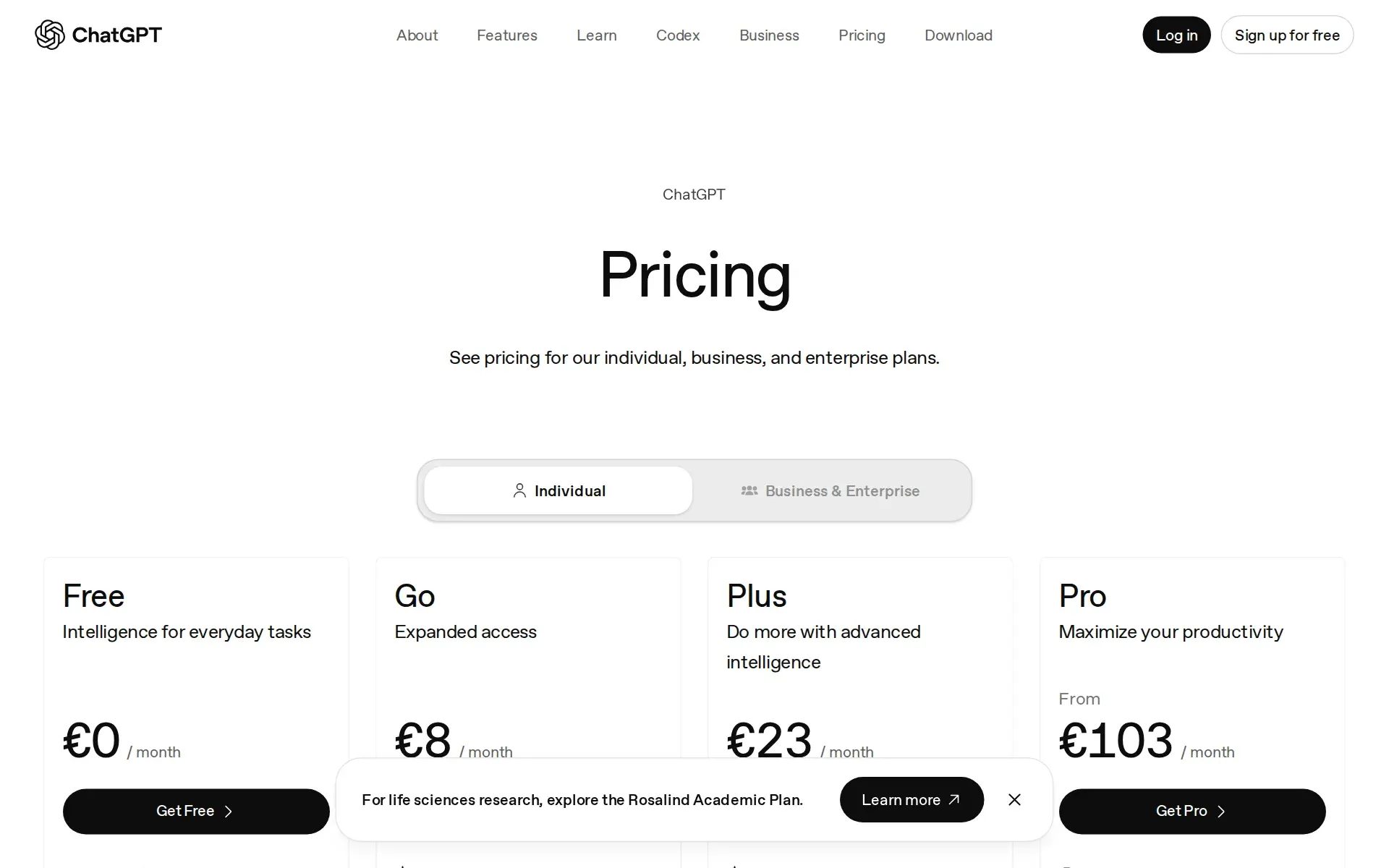
- YesA $0 Free ChatGPT plan includes Codex for quick tasks; no sales call.
Free Explore Codex capabilities on quick coding tasks. $0 /month
learn.chatgpt.com/docs/pricing - API access
- YesTypeScript and Python SDKs plus an app-server protocol drive local Codex threads programmatically.
If you use Codex through Codex CLI, the IDE extension, or Codex cloud, you can also control it programmatically.
learn.chatgpt.com/docs/codex-sdk - MCP server
- PartlyCodex is an MCP client for local and remote servers, but exposing Codex itself as an MCP server is deprecated in favour of the app server.
codex mcp-server is deprecated. The MCP server guide remains available for existing integrations.
learn.chatgpt.com/docs/codex-sdk - Bring your own key
- YesSign in with an OpenAI API key, or point the provider at Amazon Bedrock with AWS-native credentials.
You can also sign in to the ChatGPT desktop app, Codex CLI, or IDE extension with an API key. Get your API key from the OpenAI dashboard.
learn.chatgpt.com/docs/auth
Buying it for a team
- A company can buy it
- YesBusiness is self-serve for 2+ users; Enterprise and Edu are sold through sales.
Business Bring Codex into your startup or growing business. $20 / user / month*
learn.chatgpt.com/docs/pricing - Seat model
- YesPer-user pricing with a two-seat floor and no published ceiling; monthly billing costs $25 per user.
*2+ users, billed annually. $25 per user per month when billed monthly.
learn.chatgpt.com/docs/pricing - Pooled budget
- PartlyCredit-based workspace agreements draw from one shared pool; individual plans have per-user rate limits instead.
For eligible credit-based agreements, Work activity draws from a shared pool of workspace credits.
learn.chatgpt.com/docs/enterprise/chatg… - Admin controls
- Yesrequirements.toml pins approval policy, sandbox modes, permission profiles, allowed MCP servers and web-search mode; available on every plan including API-key use.
Requirements constrain security-sensitive settings (approval policy, approvals reviewer, automatic review policy, sandbox mode, permission profiles,…
learn.chatgpt.com/docs/enterprise/manag… - Audit log
- PartlyCompliance API audit logs are listed as Enterprise-only; Plus, Pro, Business and API-key use are marked unavailable.
Audit logs and usage monitoring via the Compliance API
learn.chatgpt.com/docs/pricing - Single sign-on
- PartlySAML SSO from Business upward; the feature matrix marks it unavailable on Plus, Pro and API-key auth. SCIM is Enterprise-only.
A secure, dedicated workspace with essential admin controls, SAML SSO, and MFA
learn.chatgpt.com/docs/pricing
What happens to your code
- Opt out of training
- PartlyBusiness, Enterprise and API-key usage are not trained on by default; the same matrix marks Plus and Pro unavailable.
No training on your business data by default.
learn.chatgpt.com/docs/pricing - Data residency
- PartlyRetention and residency controls are Enterprise-only and apply only to eligible content and supported workloads.
Data residency and inference residency apply only to eligible content and supported workloads, subject to the organization's agreement, region, and…
learn.chatgpt.com/docs/enterprise/chatg… - Getting out
- PartlyEnterprise admins export supported records with published Bash and PowerShell download scripts; sessions are plain files on disk.
Export supported records into an audit or investigation system.
learn.chatgpt.com/docs/enterprise/compl… - Certifications
- YesSOC 2 Type 2 report plus ISO 27001, 27017, 27018 and 27701 certification, with GDPR and CCPA listed on the trust portal.
Our products are also ISO 27001, 27017, 27018, and 27701 certified. Request access to our SOC 2 Report below to learn more about our security…
trust.openai.com
Plans and pricing
Price and terms
- Free plan
- YesYesFree plan is $0/month and is described as being for quick coding tasks
The terms in full
the usage table publishes local message allowances only from Plus upward, and image generation is stated as unavailable on Free.
What needs a higher plan
- Business / Enterprise credit-based agreements
- Pooled budget
- Enterprise & Edu
- Audit log, Data residency
Checked .
The Agents Index digest
Price changes and new agents like Codex CLI, at most once a week.
Last issue: Devin vs Claude Code: Which Should You Pick? · 13 October 2026
Works with
 GPT
GPT- YesOpen models
For AI agents
- MCP server
- Partly
- API
- Yes
Screenshots
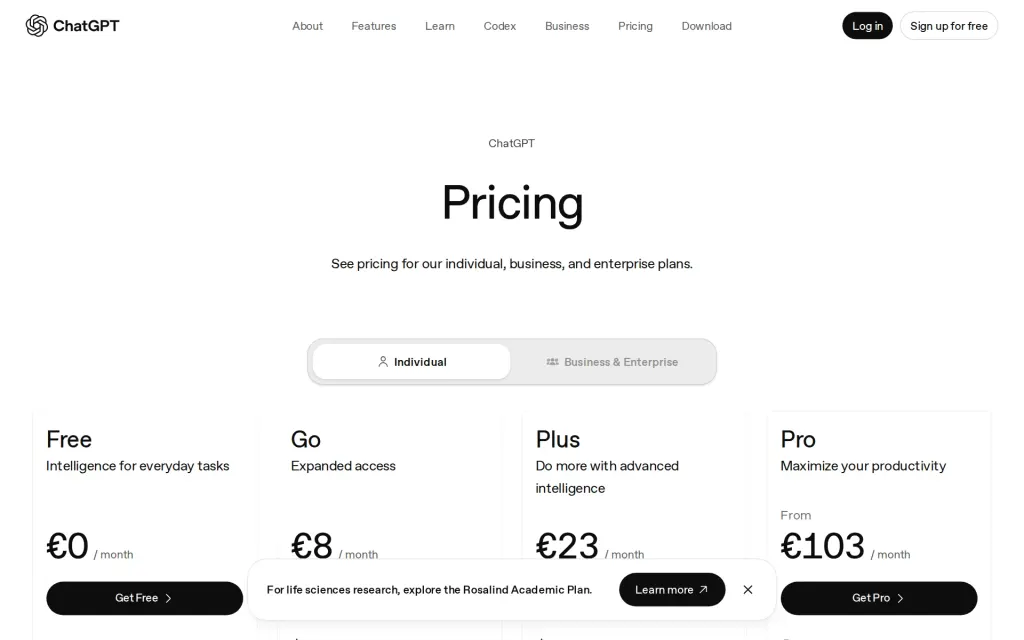
Pricing page, learn.chatgpt.com, captured 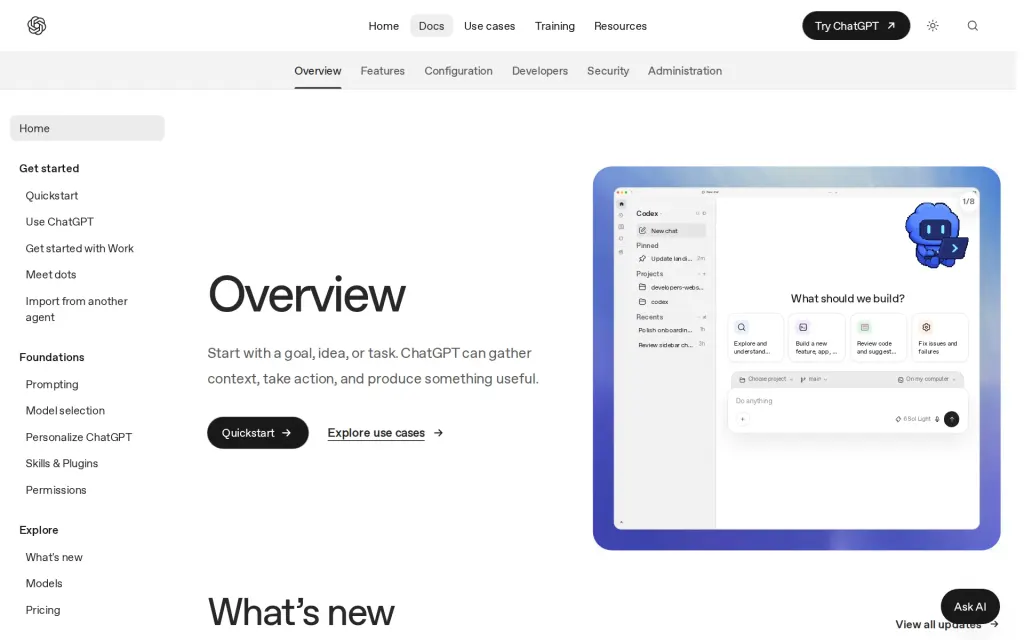
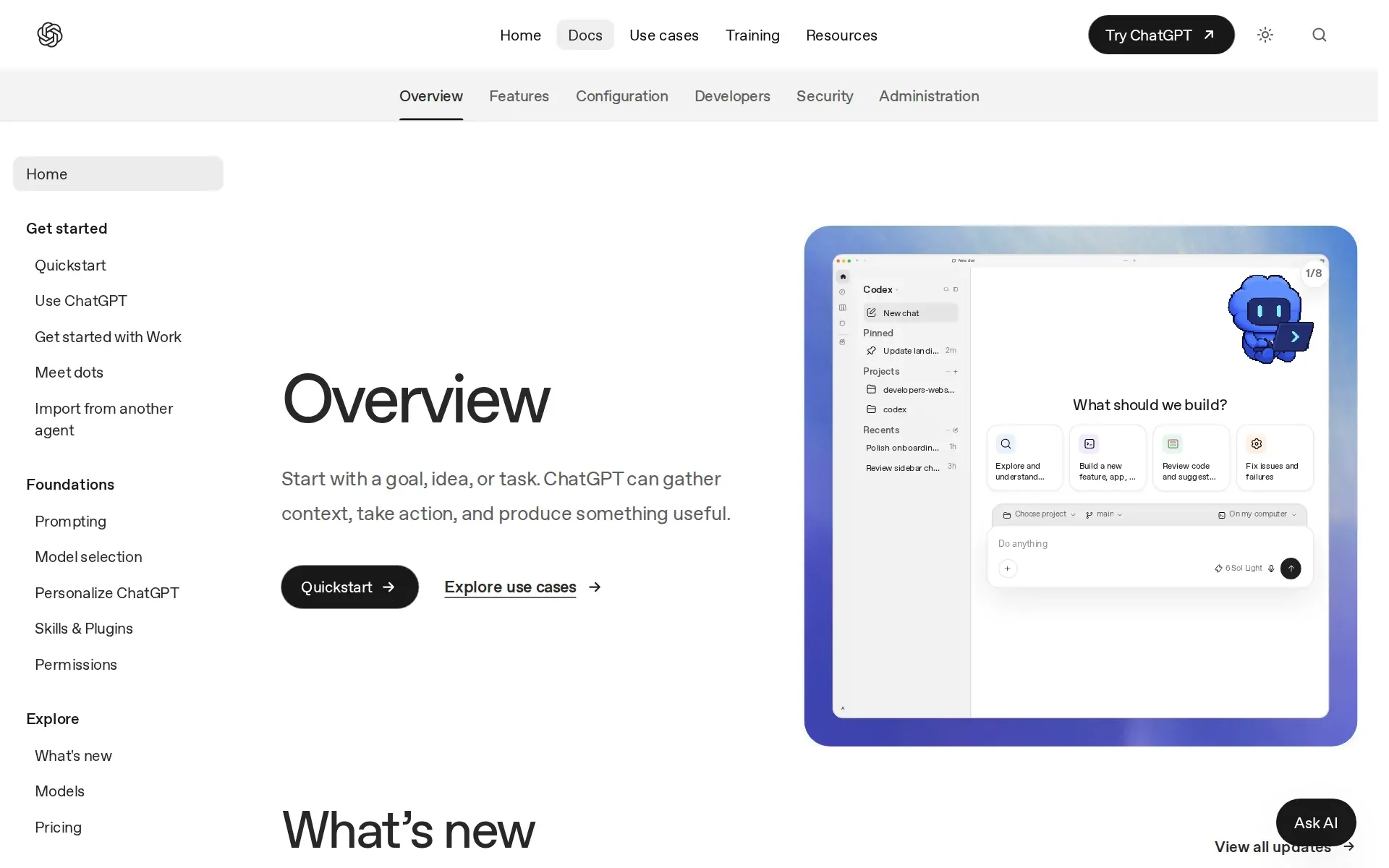
Docs, learn.chatgpt.com, captured
Filed under
Sources and updates
Last changed
Sources28
- learn.chatgpt.com/docs/pricing
- learn.chatgpt.com/docs/codex/cli
- learn.chatgpt.com/docs/agent-approvals-security
- learn.chatgpt.com/docs/agent-configuration/subagents
- learn.chatgpt.com/docs/auth
- learn.chatgpt.com/docs/codex-sdk
- learn.chatgpt.com/docs/config-file/config-advanced
- learn.chatgpt.com/docs/enterprise/chatgpt-work-cloud-security
- learn.chatgpt.com/docs/enterprise/compliance-api
- learn.chatgpt.com/docs/models
- learn.chatgpt.com/docs/prompting
- learn.chatgpt.com/guides/best-practices
- trust.openai.com/A competitor's comparison
- learn.chatgpt.com/docs/agent-configuration/subagents
- learn.chatgpt.com/docs/amazon-bedrock
- learn.chatgpt.com/docs/auth
- learn.chatgpt.com/docs/cloud
- learn.chatgpt.com/docs/code-review
- learn.chatgpt.com/docs/config-file/config-reference
- learn.chatgpt.com/docs/enterprise/chatgpt-work-usage-and-cost
- learn.chatgpt.com/docs/enterprise/managed-configuration
- learn.chatgpt.com/docs/extend/mcp
- learn.chatgpt.com/docs/github-action
- learn.chatgpt.com/docs/long-running-work
- learn.chatgpt.com/docs/mcp-server
- learn.chatgpt.com/docs/models
- learn.chatgpt.com/docs/non-interactive-mode
- learn.chatgpt.com/docs/open-source
Coverage elsewhere10
- github.comRepository23 August 2026
- github.comRepository23 August 2026
- github.comRepository23 August 2026
- npmjs.comRepository23 August 2026
- help.openai.comA competitor's comparison23 August 2026
- help.openai.comA competitor's comparison23 August 2026
- help.openai.comA competitor's comparison23 August 2026
- help.openai.comA competitor's comparison23 August 2026
- help.openai.comA competitor's comparison23 August 2026
- help.openai.comA competitor's comparison23 August 2026
The Agents Index in AI answers0 of 1
- PerplexityDoes not cite The Agents IndexAsked
Codex CLI alternatives
on Other sources: g2.com, tembo.io, nimbalyst.com, superblocks.com, pasqualepillitteri.it, pinggy.io
Updates5
- Price
- Capabilities · Free tier · Terms
- Capabilities · Free tier · Price · Terms
- Alternatives · Summary · Tagline
- Tag:multi-agent
Is this yours? Claim it free and edit it in your dashboard, or feature it in Coding agents.