11x vs Artisan vs Lead Scorer: 8 AI Sales Agents Compared
All 8 sales-and-marketing agents in our index: eight tools solving eight different jobs at eight different budgets, not eight competing chatbots.
On this page
- The eight, at a glance
- The decision: which job do you actually need done?
- 11x vs Artisan: the closest real head-to-head
- Rox: a fourth job entirely, not a rival to the other three
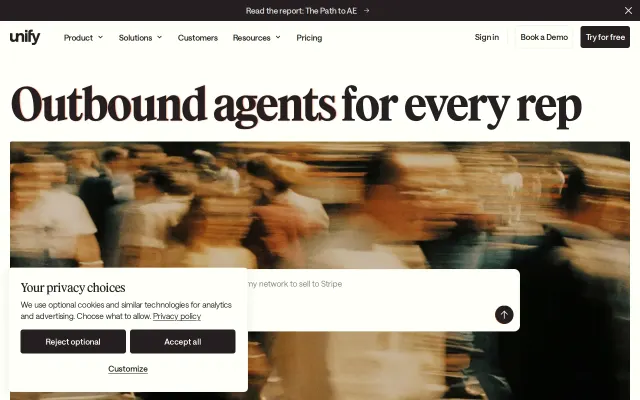
- Unify: a fifth job again, and the category's most transparent pricing
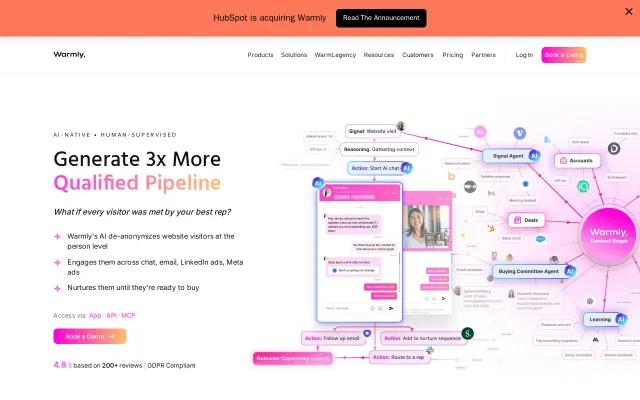
- Warmly: a sixth job entirely, anonymous-traffic identification, not enrichment
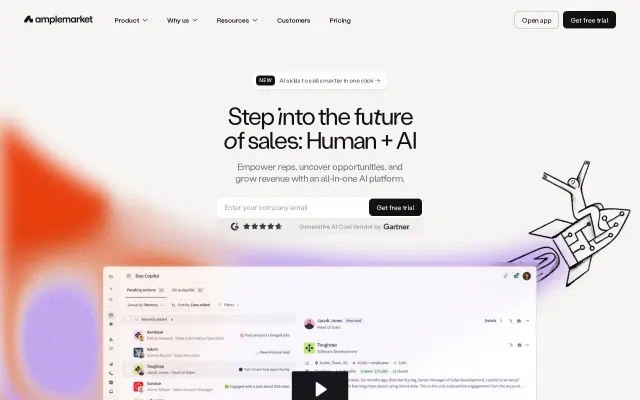
- Amplemarket: a seventh job, bundled and ready-to-use, with a human always in the loop
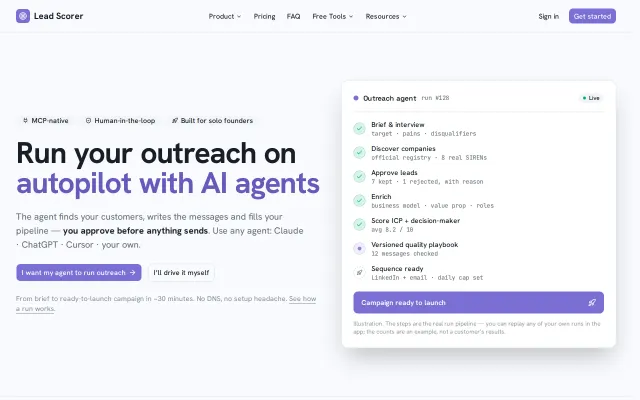
- Lead Scorer: an eighth job, the same category, priced and built for one person
- One pattern the category confirms, and the tools that break it
- FAQ
Covers 10 topics
- Sales agents
- Decision guide
- 11x
- Artisan
- Qualified
- Rox
- Unify
- Warmly
- Amplemarket
- Lead Scorer
Eight names keep coming up whenever a revenue team (or a revenue team of one) starts evaluating "AI sales agents": 11x, Artisan, Qualified, Rox, Unify, Warmly, Amplemarket and Lead Scorer. Read their own researched listings side by side and the real split isn't "which AI SDR is best": it's that these are eight tools built for eight different jobs and eight different budgets, not eight competing chatbots. 11x and Artisan are the real head-to-head: both sell a fully autonomous outbound AI SDR/BDR that researches, writes and sends on its own. Qualified runs the opposite direction: an inbound AI SDR that engages the traffic already on your website, wired natively into Salesforce (which now owns the company outright). Rox takes a fourth angle entirely: instead of automating one sales motion, it assigns a persistent AI agent to every account already in your CRM, continuously researching and monitoring the whole relationship rather than running a single campaign. Unify takes a fifth: a single conversational agent that explicitly says it is "not an AI SDR," augmenting a human seller's list-building, enrichment and sequencing rather than replacing or fully automating them, sold on genuinely transparent self-serve pricing where 11x, Artisan and Qualified are all sales-gated. Warmly takes a sixth: instead of starting from a target-account list like the other five, it starts from the anonymous traffic already on your website, de-anonymizes it, then hands identified visitors to its own Inbound Agent while a separate TAM Agent works accounts that never showed up at all. Amplemarket takes a seventh: rather than choosing a single narrow job, it bundles its own contact database and multichannel sending infrastructure with an AI copilot (Duo) that drafts outreach from daily buying-intent signals. But, unlike 11x or Artisan, a rep always reviews the draft before it sends. Lead Scorer takes an eighth: every other tool here is priced and built for a revenue team; Lead Scorer pairs a free CRM with an autonomous agent that finds accounts, scores them and queues LinkedIn and email drafts for a single founder to approve, starting at €99/month (about $111) against the four- and five-figure contracts elsewhere on this list. Which of those jobs (and which budget) you actually need almost always settles the shortlist before a single feature comparison matters.
The eight, at a glance
Every figure below is pulled from each tool's own researched listing on this site. 11x, Artisan, Qualified, Rox, Unify, Warmly and Amplemarket were each re-verified between 17 and 23 August 2026; Lead Scorer's figures come from its own current listing.
| Agent | What it actually is | Pricing | Self-serve? | Known for |
|---|---|---|---|---|
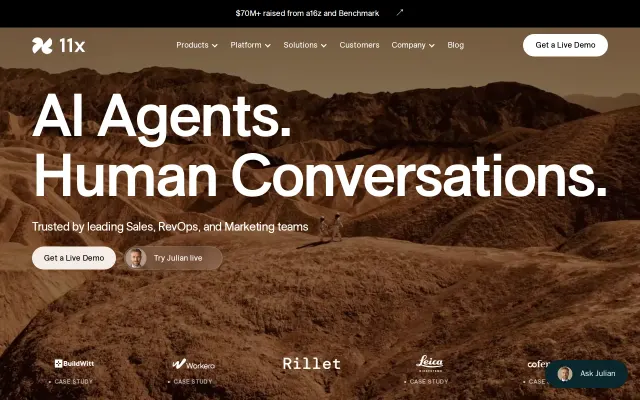
| 11x | Autonomous outbound AI SDR (Alice) + AI voice agent (Julian) | Growth tier published: Alice from $3,750/mo, Julian from $2,417–5,333/mo; Pro/Enterprise custom, no free plan | No: even Growth requires a sales call | Full-stack autonomous outbound across text and voice; a March 2025 TechCrunch report on fabricated customer logos |
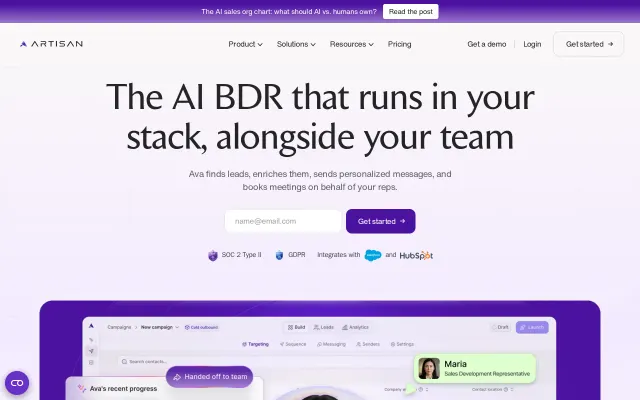
| Artisan | Autonomous outbound AI BDR (Ava) | Custom (Team/Scale/Enterprise), sales-led, no published dollar figures | No: talk to sales | End-to-end outbound with published customer results (SumUp case study); a 2025–26 LinkedIn ban and a since-settled IP dispute |
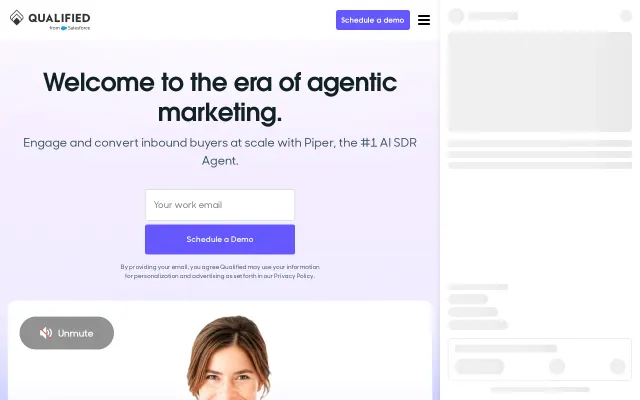
| Qualified | Inbound AI SDR (Piper), Salesforce-native | Custom, sales-led; independent procurement data (Vendr) puts the median contract at $61,000/year | No: requires a sales demo and a separate Salesforce subscription | Named enterprise case studies (Asana, Box, Greenhouse); acquired outright by Salesforce for ~$1.2B, April 2026 |
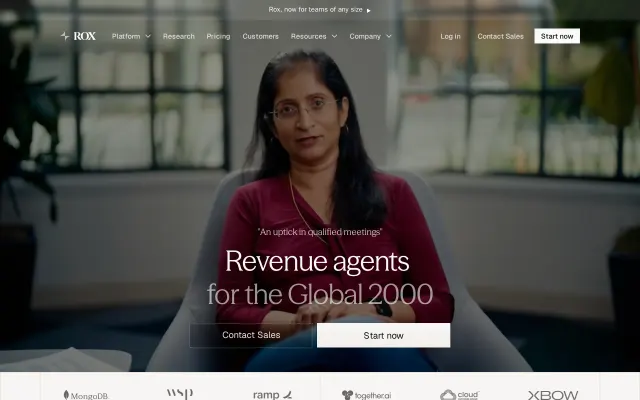
| Rox | Per-account "agent swarm" that researches, monitors and updates your existing CRM across the whole deal lifecycle | Free (Starter, 2,000 agent actions/mo) → $100/mo (Individual, 10,000 agent actions/mo) → custom Enterprise | Yes: genuine free self-serve signup, no sales call required | Continuous per-account intelligence layered on Salesforce/HubSpot; named results at Ramp, New Relic, MongoDB; young company (founded 2024), no confirmed public API |
| Unify | Single conversational GTM agent for list-building, enrichment and sequencing, explicitly "not an AI SDR" | Free (up to 3 seats) → $20/seat/mo (Base) → $60/seat/mo (Pro) → custom Business | Yes: genuine $0 tier, self-serve up through Pro | The category's most transparent self-serve pricing; recently pivoted off an older enterprise-only model that some third-party sources still describe; no public developer API |
| Warmly | Website-visitor de-anonymization + two named agents (Inbound Agent, TAM Agent) | $4,875/quarter (or $10,000/yr) Web-Deanonymization → $6,500/quarter (or $20,000/yr) Inbound Chat → $9,750/quarter (or $30,000/yr) Inbound Autopilot | No: quarterly or annual contract only, no monthly plan or free tier | The only tool here that starts from anonymous traffic rather than a known list; person-level match rate independently reported at ~15–25%; acquired by HubSpot, June 2026 |
| Amplemarket | Bundled contact database + multichannel sequencing + Duo Copilot, an AI layer that drafts outreach from buying-intent signals for a rep to approve | $600/mo (Startup, 2 seats, billed annually) → custom Growth (4 seats) → custom Elite (10 seats); 14-day free trial | Partial: a published entry price, but no self-serve monthly option and no permanent free tier | 2024 Gartner Cool Vendor in Generative AI for Sales; 4.6/5 across 603 G2 reviews; never sends a draft without human review |
| Lead Scorer | Free CRM + autonomous AI SDR (finds accounts, scores them, queues outreach) built for solo founders | Free CRM at €0/month → Pro (autonomous SDR, MCP, approval queue) €99/month (about $111) → Done for You (monthly review + strategy) €299/month (about $335); yearly billing saves 16% | Yes: self-serve from a free CRM tier | The only tool here priced in euros and built for one person instead of a team; every draft queued behind human sign-off before it sends |
The decision: which job do you actually need done?
All eight carry a full researched verdict on their own listing, including who each one is explicitly not for. Read together, the honest decision tree runs on the job and the budget, not the feature list:
- You want a fully autonomous outbound motion (research, multi-channel sequencing and even phone calls) and you're willing to run a rigorous paid pilot → 11x. Alice runs the whole SDR motion end to end and Julian adds an AI voice agent for calls, both backed by a16z and Benchmark. Watch out for: even the published Growth-tier price (from $2,417/month) still requires a sales call rather than self-serve checkout, Pro/Enterprise stays fully custom, and there's no free plan; in March 2025 TechCrunch reported 11x had displayed logos of companies (including ZoomInfo and Airtable) that said they weren't customers, alongside former-staff accounts of high early churn. Founder Hasan Sukkar stepped down as CEO two months later, replaced by then-CTO Prabhav Jain, but evaluate on your own measured results, not the marketing.
- You want the same kind of fully autonomous outbound AI BDR, backed by real published customer numbers → Artisan. Since its May 2026 "Ava 2.0" rebuild, Ava sources, enriches, personalises, handles replies and objections, and books meetings without a human touching each step, and Artisan publishes specific results (SumUp's $52-per-lead case study) rather than vague testimonials. Watch out for: pricing is even more opaque than 11x's (three "talk to sales" tiers with no published starting figure at all, despite an announced $250/mo tier that isn't live on the site today), plus a real, dated compliance incident (a ~3-week LinkedIn company-page ban, Dec 2025–Jan 2026, over a data vendor's ToS violation) and a May 2026 dispute over unauthorised use of a cartoonist's artwork that the two sides settled within the month, with Artisan pulling the ads.
- Your bottleneck is inbound (converting the traffic already hitting your website), not outbound prospecting, and you already run Salesforce → Qualified. Piper engages visitors in real time, qualifies them against CRM data and books the meeting, with named results at Asana, Box and Greenhouse, and now the backing of Salesforce's own balance sheet after its April 2026 acquisition. Watch out for: Salesforce is a hard requirement (billed separately), there's no self-serve tier, and, now that it's Salesforce-owned, expect the roadmap to bend toward Agentforce bundling rather than independent evolution.
- Your bottleneck isn't running a sales motion at all: it's that reps and the CRM can't keep up with what's actually happening inside each account → Rox. Its agent swarm assigns one persistent agent per account that researches deal risk, drafts call prep and keeps Salesforce/HubSpot updated automatically, answered through plain-English questions instead of a new dashboard to learn. Watch out for: no confirmed public API, only a two-year production track record since its 2024 founding, and the free/Individual tiers cap out at 2,000–10,000 agent actions/month before a real book of accounts needs the custom Enterprise tier.
- You want a single agent to handle list-building, enrichment and sequencing for a human seller (not replace the seller, and not build a custom workflow canvas) and you want to start free → Unify. It explicitly says it is "not an AI SDR," chat-driven rather than spreadsheet-driven, with real-time native Salesforce/HubSpot sync and the category's most transparent pricing (a genuine $0 tier, then $20–$60/seat). Watch out for: it just pivoted business models, so re-verify pricing against unifygtm.com directly rather than older reviews; there's no confirmed public developer API; and its deepest features (GPT-5.6, write-access CRM sync, the dialer) sit behind a custom Business tier.
- Your real problem is that most of your website traffic is anonymous, and you want it identified and engaged automatically, not enriched from a list you already have → Warmly. Its Inbound Agent chats with and routes visitors already on the site while a separate TAM Agent scores and works target accounts that aren't there yet, both drawing on a combined first/second/third-party signal layer. Watch out for: person-level identification is independently reported at roughly 15–25% (company-level is more reliable, ~65%), every paid tier is a quarterly ($4,875+) or annual ($10,000+) contract with no monthly or free option, and HubSpot acquired Warmly in June 2026: worth a direct question about roadmap independence if CRM-neutrality is why you're looking at it.
- You want prospecting data, multichannel sequencing and AI signal detection bundled into one ready-to-use platform, and you want a human reviewing every message before it sends → Amplemarket. Duo Copilot watches 100+ buying-intent signals a day and drafts personalized outreach across email, LinkedIn, calls and WhatsApp, but a rep always reviews, edits or dismisses each draft. Unlike 11x or Artisan, it's never sent unsupervised. Watch out for: published self-serve pricing stops at the 2-seat Startup tier ($600/month); Growth and Elite are both custom-quoted, and the company's own pricing page and blog disagree on the Startup tier's credit numbers.
- You're a solo founder or a one-person sales team, not hiring an SDR or buying an enterprise contract → Lead Scorer. It's the only tool on this list priced for one person: a free CRM to start, then agents that find accounts, score them and queue LinkedIn and email drafts for you to approve, priced in euros and self-serve: Pro runs €99/month (about $111) against four- and five-figure contracts for 11x, Artisan or Qualified. Watch out for: every draft still needs your own sign-off before it sends, so it's an assistant rather than the fully autonomous motion 11x's Alice or Artisan's Ava run, and the top Done-for-You tier (€299/month (about $335)) adds a human strategy review rather than more automation.
11x vs Artisan: the closest real head-to-head
Of the eight, 11x and Artisan are the actual rivals: both sell a fully autonomous outbound AI SDR/BDR that researches, writes and books meetings without a human working each step, both remain sales-led at every tier, and both have drawn real, TechCrunch-reported controversy within the past 18 months. The difference is less about capability than about what each is proving right now. 11x pairs its outbound AI SDR (Alice) with a dedicated AI voice agent (Julian) for phone conversations, a genuine second channel Artisan doesn't offer. Artisan counters with a more mature evidence trail post-relaunch: a named, numbers-backed case study (SumUp), SOC 2 Type II certification with SSO/SAML, and a native dialer that at least queues human-placed calls with an AI-written brief, versus fully autonomous voice. 11x is the more transparent of the two on price (its Growth tier publishes a starting figure even though a sales call is still required to buy it), while Artisan publishes no dollar figure at all; and both have had a real, reported governance lapse (11x's fabricated customer logos; Artisan's LinkedIn ban and IP dispute) that's worth raising directly in a vendor call before signing an annual contract.
Rox: a fourth job entirely, not a rival to the other three
Rox doesn't compete head-to-head with any of the other three the way 11x and Artisan compete with each other: it solves a different problem and could reasonably run alongside any of them. Where 11x and Artisan run autonomous outbound sequences and Qualified engages inbound traffic, Rox assigns a persistent "agent swarm" to every account already in Salesforce or HubSpot, continuously researching deal risk, drafting call prep and keeping the CRM itself current, explicitly positioned to sit on top of the CRM rather than replace it or run the outbound/inbound motion. That makes it the right fit for a revenue team whose real bottleneck is that reps and the CRM can't keep up with what's happening inside an account, not for a team still building or running the outbound/inbound motion itself. It's also, oddly, the one enterprise-shaped tool here with a real self-serve price: a free Starter tier (2,000 agent actions/month) and a $100/month Individual tier (10,000 agent actions/month), no sales call required to start, a genuine outlier against Artisan's and Qualified's fully sales-led pricing.
Unify: a fifth job again, and the category's most transparent pricing
Unify doesn't compete head-to-head with any of the other four the way 11x and Artisan compete with each other: it sits between light-touch data enrichment and 11x/Artisan's full autonomy. A seller chats with one agent that handles list-building, signal-based prioritization (job changes, hiring, funding, website intent), enrichment and multi-channel sequencing, explicitly positioned as augmenting a human rep rather than replacing one, and Unify's own copy states plainly it is "not an AI SDR." Its real point of difference from the rest of the category is the buying motion, not the job: a genuine $0 self-serve tier (up to 3 seats) and transparent $20/seat (Base) and $60/seat (Pro) paid tiers, at a moment when 11x and Artisan are both entirely custom-quoted and sales-gated, and even Amplemarket's cheapest self-serve tier runs $600/month. It also has real-time native CRM sync (Salesforce via Change Data Capture, HubSpot via webhooks) starting on the Pro tier. The one thing to watch: Unify just completed a dramatic pivot off an older enterprise-only annual model, so several third-party review sites published within the past few months still describe pricing that no longer applies; treat unifygtm.com/pricing itself as the only current source, and note there's no confirmed public developer API for teams that want to build on top of it rather than just inside it.
Warmly: a sixth job entirely, anonymous-traffic identification, not enrichment
Warmly doesn't compete head-to-head with any of the other five: it starts from a different problem than all of them. 11x, Artisan and Unify all assume you already have (or are building) a target-account or prospect list; Qualified and Rox assume the relationship already exists, as a website visitor or a CRM record. Warmly assumes neither: most of a B2B site's traffic is anonymous, so it de-anonymizes visitors at the company (~65% match rate) and, less reliably, the person level (independently reported ~15–25%), then hands identified visitors to its own Inbound Agent (real-time chat, popups, retargeting) while a separate TAM Agent scores and works accounts that never showed up on the site at all. That pairs a slice of Qualified's inbound job with a slice of 11x/Artisan's outbound orchestration, and Warmly has historically worked with any CRM via its own API rather than Qualified's hard Salesforce requirement, though HubSpot completed its acquisition of Warmly in June 2026, the same pattern that put Qualified inside Salesforce, and it's worth confirming CRM-neutrality still holds before treating that as a differentiator. The other catch is pricing: unlike Rox, Unify or Lead Scorer, Warmly has no self-serve monthly plan or free tier as of this listing's live pricing check: every paid tier is a quarterly ($4,875+) or annual ($10,000+) contract, and both independently-fetched third-party reviews used while researching this guide describe an older, cheaper monthly-plus-free-tier structure that no longer matches warmly.ai/pricing today, which is exactly why this guide verifies pricing live rather than repeating review-site figures.
Amplemarket: a seventh job, bundled and ready-to-use, with a human always in the loop
Amplemarket doesn't compete head-to-head with any of the other six the way 11x and Artisan compete with each other: it's the only tool here that ships a complete, ready-to-use platform rather than one narrow job: its own 200M+-contact database, multichannel sending infrastructure (email, LinkedIn, calls, WhatsApp) and deliverability tooling (mailbox rotation), all bundled together. Duo Copilot, its AI layer, monitors 100+ buying-intent signals a day (job changes, competitor-review mentions, site visits, custom CRM triggers) and drafts personalized outreach. But, deliberately, it never sends without a rep reviewing, editing or dismissing the draft first, a different design choice from 11x's Alice or Artisan's Ava, both built to send autonomously. It's also a different bet from Unify's job: Unify is a single lightweight chat agent that augments a seller using tools you already have, where Amplemarket ships its own execution infrastructure end to end. Lead Scorer shares Amplemarket's principle that nothing sends without a human's sign-off, just at a fraction of the price and scale: a founder approving their own drafts at €99/month (about $111) rather than a team at $600/month and up. A 2024 Gartner Cool Vendor recognition in Generative AI for Sales (one of only five vendors named) and a strong 4.6-star, 603-review G2 track record back a company that isn't a brand-new entrant. The catch: published self-serve pricing stops at the 2-seat Startup tier ($600/month, billed annually); Growth (4 seats) and Elite (10 seats) are both custom-quoted, and this guide found Amplemarket's own pricing page and a company blog post disagreeing on the Startup tier's exact credit numbers: treat amplemarket.com/pricing as the source of truth over older company content.
Lead Scorer: an eighth job, the same category, priced and built for one person
Lead Scorer doesn't compete with the other seven on capability so much as on who is meant to buy it. Every other tool on this list is priced, demoed and onboarded for a revenue team: Qualified requires a Salesforce subscription running alongside it, Warmly and Amplemarket price in $600–$10,000-plus committed spend, and even Rox and Unify's free tiers assume a company account signing up. Lead Scorer starts from a free CRM at €0/month and adds an autonomous agent on top of it: it finds accounts, scores them against a founder's own criteria, and queues LinkedIn and email drafts rather than sending them outright. The Pro tier (€99/month (about $111)) is where the autonomous scoring and outreach queue switch on, with MCP support for wiring it into other tools; yearly billing brings that down 16%. A Done-for-You tier at €299/month (about $335) adds a monthly human review and strategy session, closer to a fractional SDR than pure software. Watch out for: every draft still needs the founder's own sign-off, so it isn't the unattended outbound motion 11x's Alice or Artisan's Ava run, and pricing is in euros, worth converting before comparing it line-for-line against the dollar figures elsewhere in this guide.
One pattern the category confirms, and the tools that break it
Of the eight, only Rox, Unify and Lead Scorer publish real self-serve pricing with a genuine, no-sales-call free or near-free start. The four products built and marketed as autonomous sales/engagement agents that run a specific motion for a team (11x, Artisan, Qualified, Warmly) are all contract- or sales-gated at every tier that matters, with no permanent free plan; 11x is the partial exception, publishing a Growth-tier starting figure (from $2,417/month) even though buying it still requires a sales call, Warmly publishes its quarterly/annual prices outright but requires a contract to start at all, while Artisan has zero public dollar figures and Qualified's only pricing signal comes from third-party procurement data (Vendr), not the vendor. Amplemarket sits in a middle position none of the other six occupy: a real, published entry price ($600/month) reachable without a sales call, but no permanent free tier and no published price past 2 seats: self-serve enough to start, sales-gated to grow. What's notable is that Rox and Unify both break the assumption that "enterprise-shaped" or "capable" and "no self-serve" go together: Rox is squarely positioned at the same large revenue teams as Qualified and Artisan yet ships a real free plan and a published $100/month tier, while Unify goes further still, offering the lowest per-seat self-serve entry point in the category ($20/seat) alongside real-time native CRM sync; Lead Scorer goes further again by dropping the team assumption entirely, at €99/month (about $111) for one person. It's also worth naming plainly: two of the eight listings above (11x, Artisan) carry real, independently reported controversies from the last 18 months; two (Qualified, Warmly) were acquired by larger CRM vendors within the past several months (Salesforce in April 2026, HubSpot in June 2026); and two (Unify, Warmly) each just changed their entire pricing model or product structure, which is why their own listings and this guide both flag re-verifying current terms directly with the vendor before buying on outdated third-party content. None of that is a reason to rule any of them out on its own (all are backed by real capital or real usage and have shipped genuinely capable products), but it is a reason to verify claims directly with the vendor and, where possible, with a reference customer, rather than buying on a demo (or a stale review) alone.
FAQ
Is there an AI sales agent built for a solo founder instead of a team?
Yes: Lead Scorer, and it's the only one of these eight priced and onboarded for one person. A free CRM at €0/month sits under an autonomous agent that finds and scores accounts and queues LinkedIn and email drafts for the founder to approve; the Pro tier that switches on that automation runs €99/month (about $111). Every other tool here assumes a company account and, in several cases, a separate CRM subscription or a sales call before you can even see a price.
Should I pick 11x or Artisan?
Both are fully autonomous outbound AI SDR/BDR products that are 100% sales-led; see the head-to-head above. 11x publishes a Growth-tier starting price (from $2,417/month) even though buying it still requires a sales call; Artisan has zero public dollar figures at all, but a more mature published evidence trail (a numbers-backed case study, SOC 2 Type II) and a native dialer bridging to human-placed calls. Both have had a real, reported controversy in the past 18 months, so verify current claims directly before committing to an annual contract.
Can I get transparent, self-serve pricing for an AI sales agent?
Yes, from three of these eight: Rox, Unify and Lead Scorer all have a real, always-on free or near-free start and published pricing tiers: Unify's paid entry is the lowest in dollar terms ($20/seat/month), Lead Scorer's is the lowest in absolute terms (€99/month (about $111), one seat). Neither 11x, Artisan, Qualified nor Warmly offers self-serve checkout; 11x is the partial exception on transparency, publishing a Growth-tier starting figure (from $2,417/month) even though a sales call is still required, Warmly publishes its quarterly/annual prices outright but requires a contract to start, while Artisan has no public dollar figure at all and Qualified's only price data point (~$61,000/year median) comes from third-party procurement data (Vendr), not the vendor. Amplemarket sits in between: a real published entry price ($600/month, reachable without a sales call), but no permanent free tier and no published price past its 2-seat Startup tier.
Is Qualified still an independent company?
No. Salesforce completed its acquisition of Qualified on April 1, 2026 for an acquisition-date fair value of roughly $1.2 billion, folding Piper into Agentforce. Qualified also hard-requires a separate Salesforce CRM subscription, so it isn't usable standalone regardless of ownership.
Do any of these eight have a free trial?
Rox, Unify and Lead Scorer all have a genuine, always-on free or near-free plan: Rox's Starter tier covers 2,000 agent actions/month, Unify's Free tier covers up to 3 seats with a limited credit pool (its Pro tier separately adds a 14-day free trial), and Lead Scorer's CRM is free at €0/month before its €99/month (about $111) Pro tier switches on the autonomous agent. 11x, Artisan and Qualified all require a sales demo with no published self-serve or trial tier, and Warmly has no free tier or trial as of this listing's live pricing check: every paid tier requires at least a quarterly contract. Amplemarket offers a 14-day free trial (per its own pricing blog post and independent reviews) but no permanent free tier before its $600/month Startup plan.
Is there an AI sales agent that always keeps a human reviewing before it sends?
Yes: two of these eight, at very different scales. Amplemarket's Duo Copilot monitors 100+ buying-intent signals a day and drafts personalized, multichannel outreach, but a rep always reviews, edits, sends or dismisses each draft, starting at $600/month for a team. Lead Scorer does the same in miniature for a solo founder: agents find and score accounts and queue LinkedIn and email drafts, but nothing sends until the founder signs off, starting at €99/month (about $111). Neither works the way 11x's Alice or Artisan's Ava are built to: both of those send autonomously once configured.
What does Rox do that the other three don't?
Rox assigns a persistent AI agent to every account already in your CRM, continuously researching the relationship, flagging deal risk and keeping Salesforce or HubSpot updated, rather than running an outbound sequence (11x, Artisan) or engaging inbound website traffic (Qualified). It's built to sit on top of an existing CRM rather than replace it or automate a single sales motion, so it can reasonably run alongside any of the other three rather than compete with them directly.
Is Unify an AI SDR like 11x or Artisan?
No. Unify explicitly says it is "not an AI SDR." Where 11x's Alice and Artisan's Ava are pitched as autonomous replacements for a rep, Unify is a single chat-based agent that augments a human seller with list-building, signal-based prioritization, enrichment and sequencing. It's also one of two of the eight (with Warmly) that just changed its entire pricing model or structure, so re-verify any figure against unifygtm.com/pricing directly rather than an older review.
Is there an AI sales agent that identifies anonymous website visitors?
Yes: Warmly, and it's the only one of these eight built around that job. It de-anonymizes site traffic at the company (~65% match) and person (~15–25%) level, then hands identified visitors to its own Inbound Agent while a separate TAM Agent works target accounts that never visited at all. It has historically worked with any CRM, unlike Qualified's Salesforce requirement, but HubSpot acquired Warmly in June 2026, so confirm CRM-neutrality still holds if that's the reason you're evaluating it. It's sold only on quarterly or annual contracts, with no self-serve monthly plan or free tier today.
How much cheaper is Lead Scorer than the other tools in this comparison?
Lead Scorer's CRM is free at €0/month, and its autonomous Pro tier is €99/month (about $111) for one person, against 11x's $3,750/month Growth tier, Warmly's $4,875-per-quarter entry contract, or Qualified's roughly $61,000/year median deal. It's built for a solo founder rather than a revenue team, so the price comparison only holds if you're actually buying for one person: it doesn't have the account-swarm monitoring or multichannel sending infrastructure that Rox, Amplemarket or the full autonomous AI SDRs run at team scale.
Every agent above carries its own full researched listing: pricing tiers, sourced pros and cons, and a committed verdict on who it's for and who it isn't. Start with the sales & marketing agents category for the full set.








The digestFree
Which agents actually ship.
New agents and articles, by email, at most once a week.
Last issue · No. 1 · 13 October 2026Devin vs Claude Code: Which Should You Pick?
One-click unsubscribe
The Agents Index digest
The agents we added and what we wrote about them, by email, no more than once a week.
Last issue: Devin vs Claude Code: Which Should You Pick? · 13 October 2026