n8n vs Lindy vs Dify: 16 AI Agent Platforms Compared
All 16 agent platforms in our index, split on what you are really choosing: open-source developer tool, no-code builder, managed enterprise, or personal assistant.
On this page
Scope · 18 topics
- Agent platforms
- Decision guide
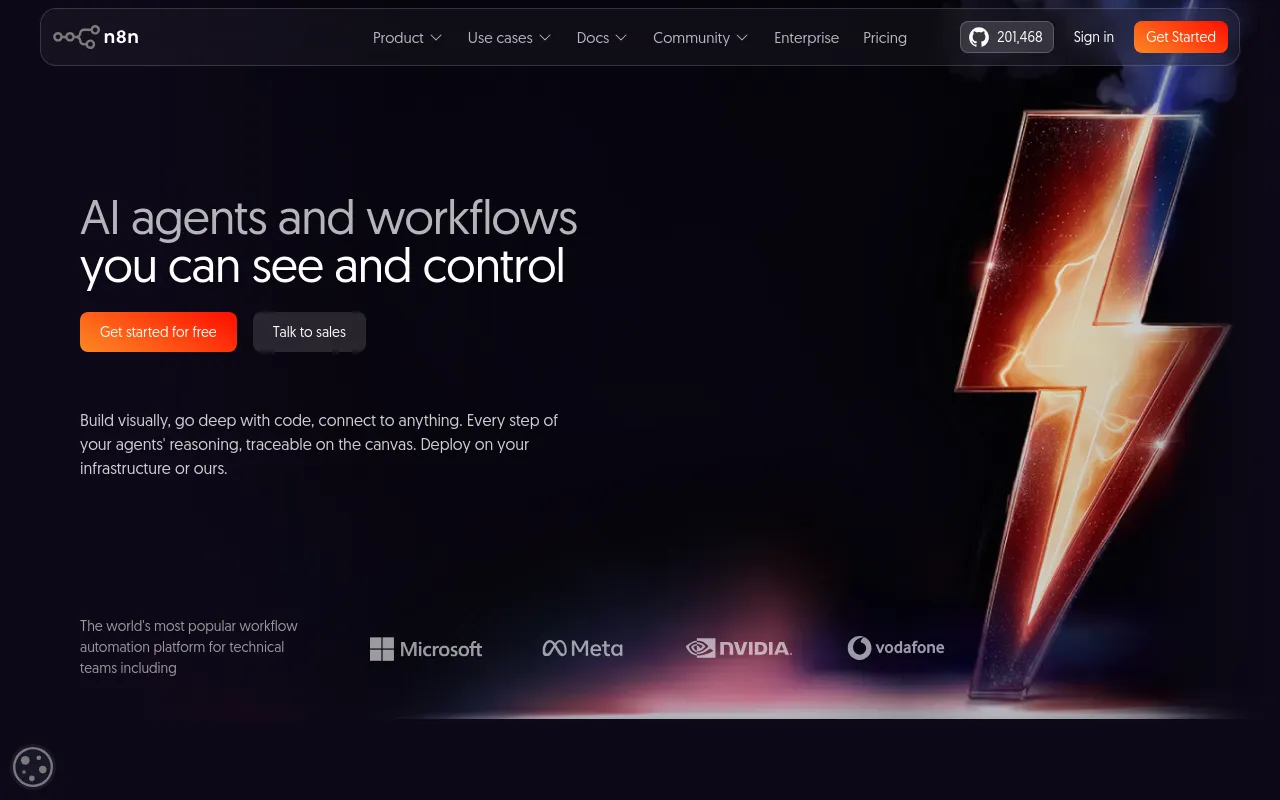
- n8n
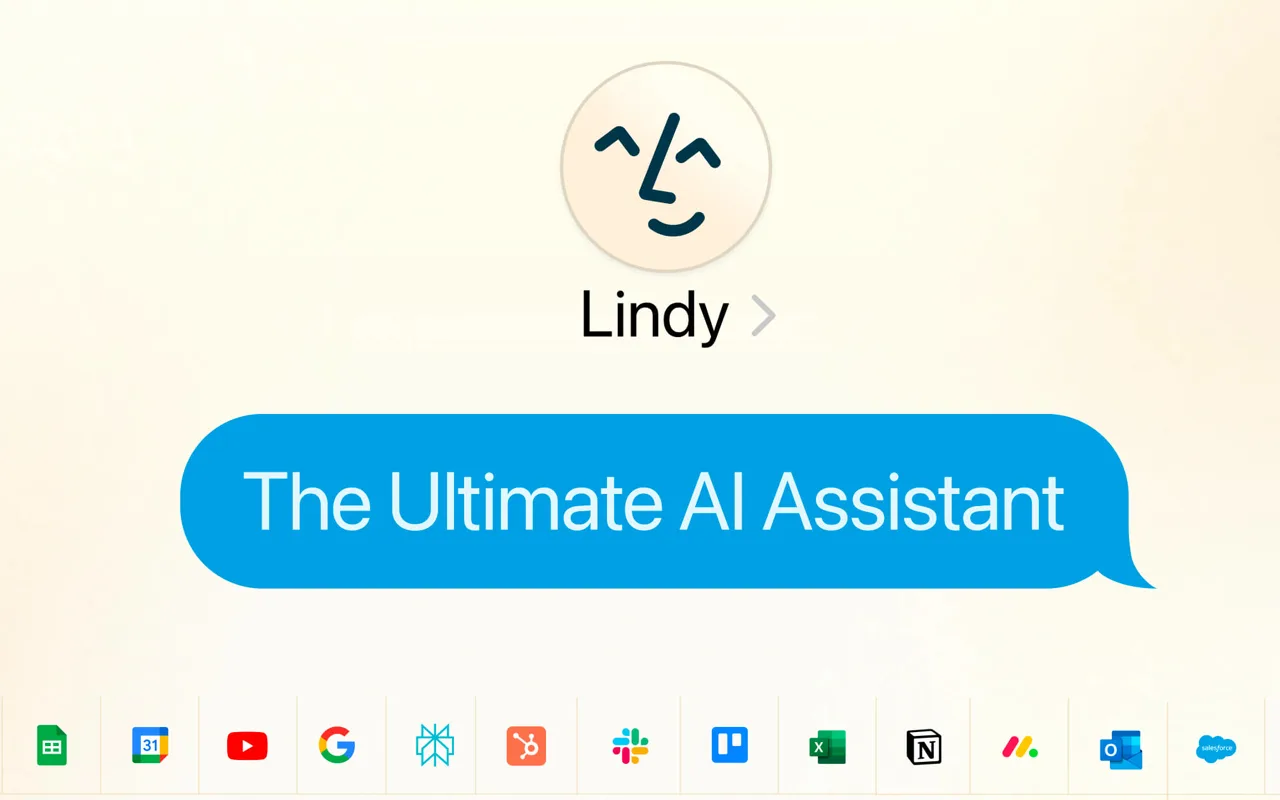
- Lindy
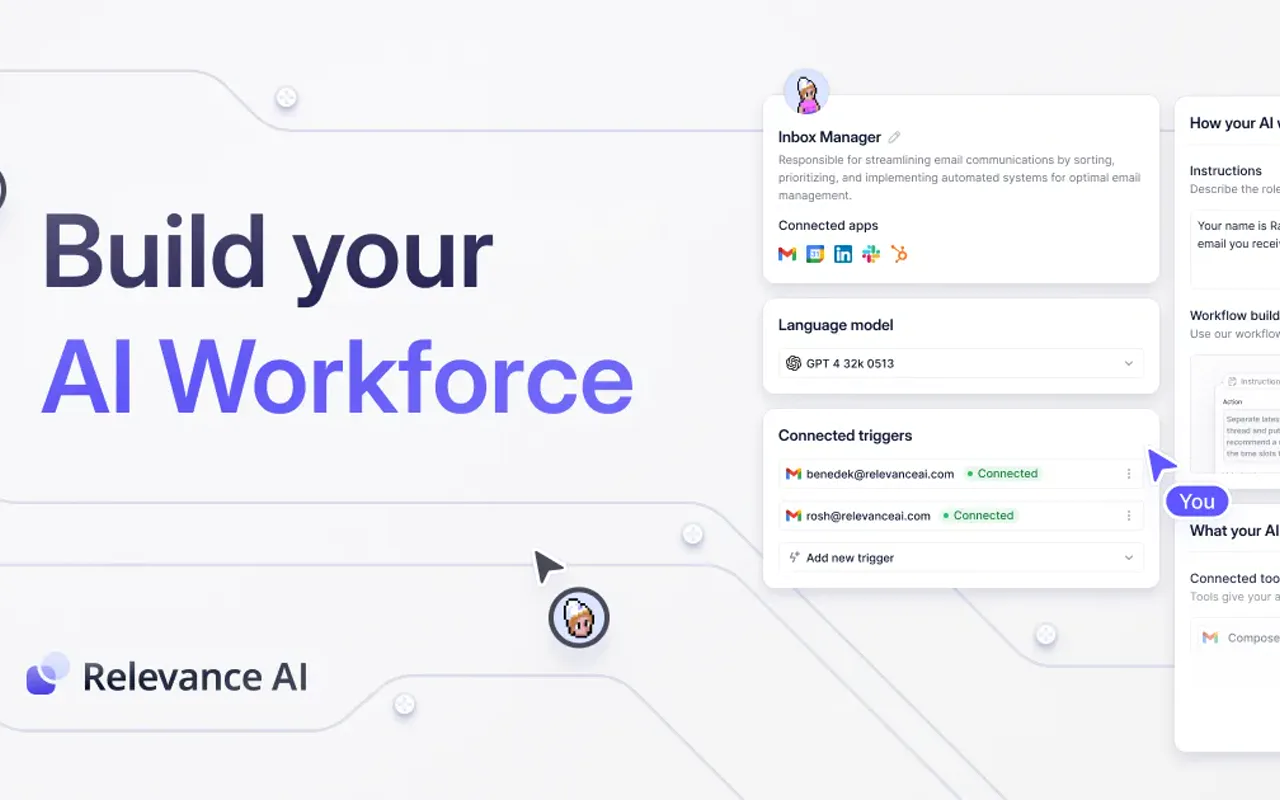
- Relevance AI
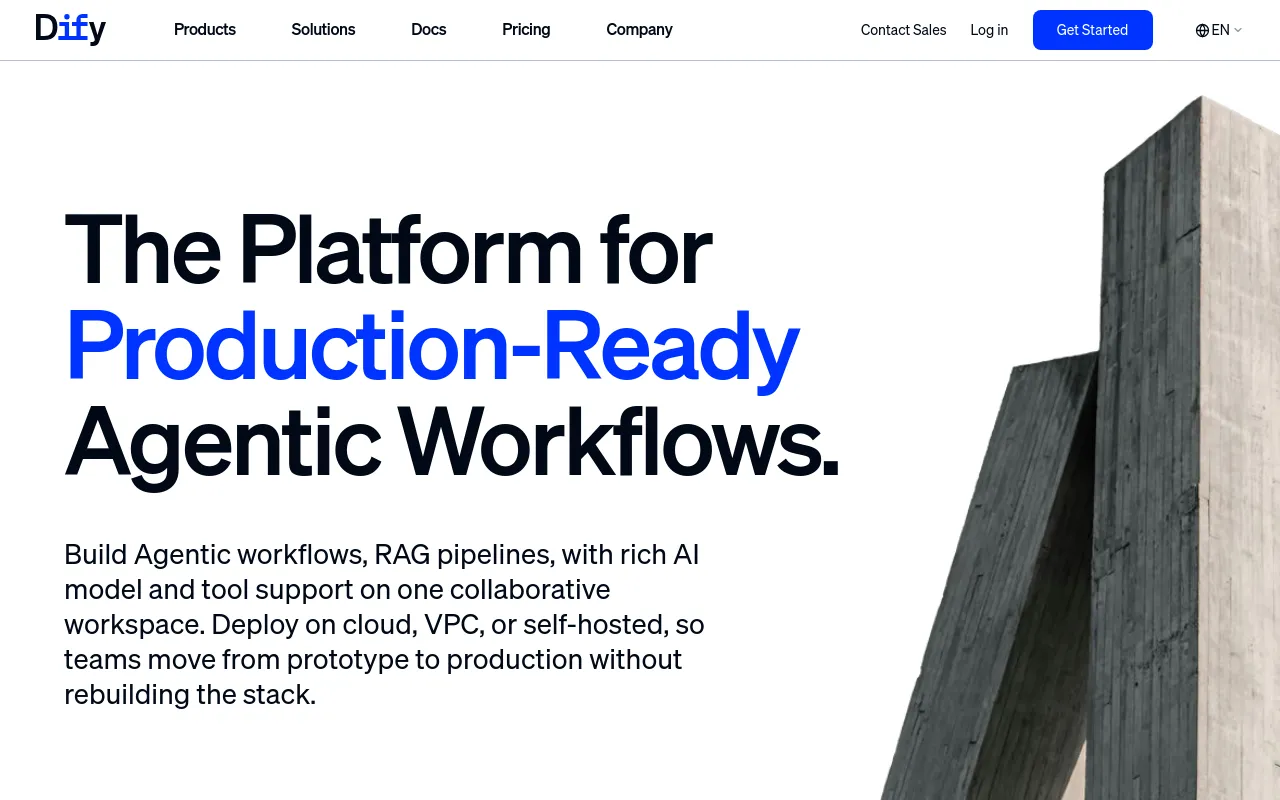
- Dify
- Botpress
- Sierra
- Salesforce Agentforce
- Moveworks
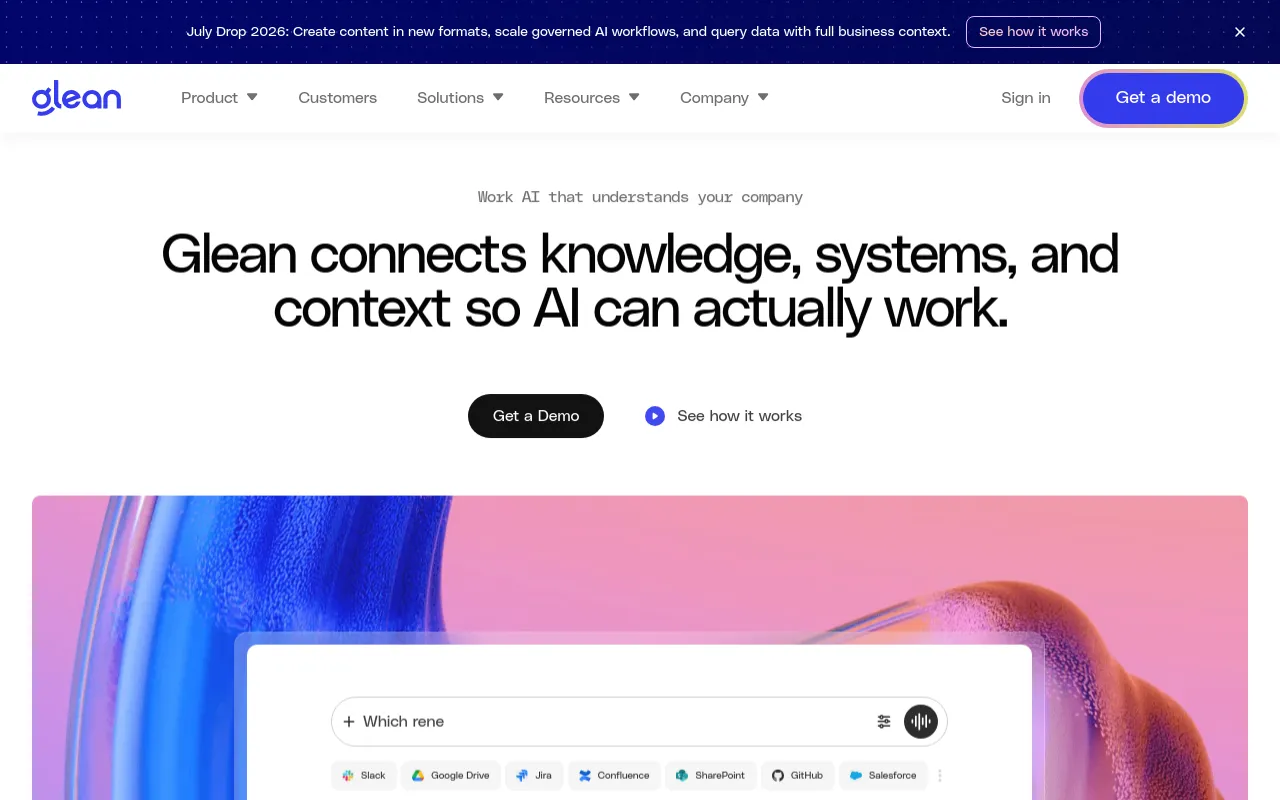
- Glean
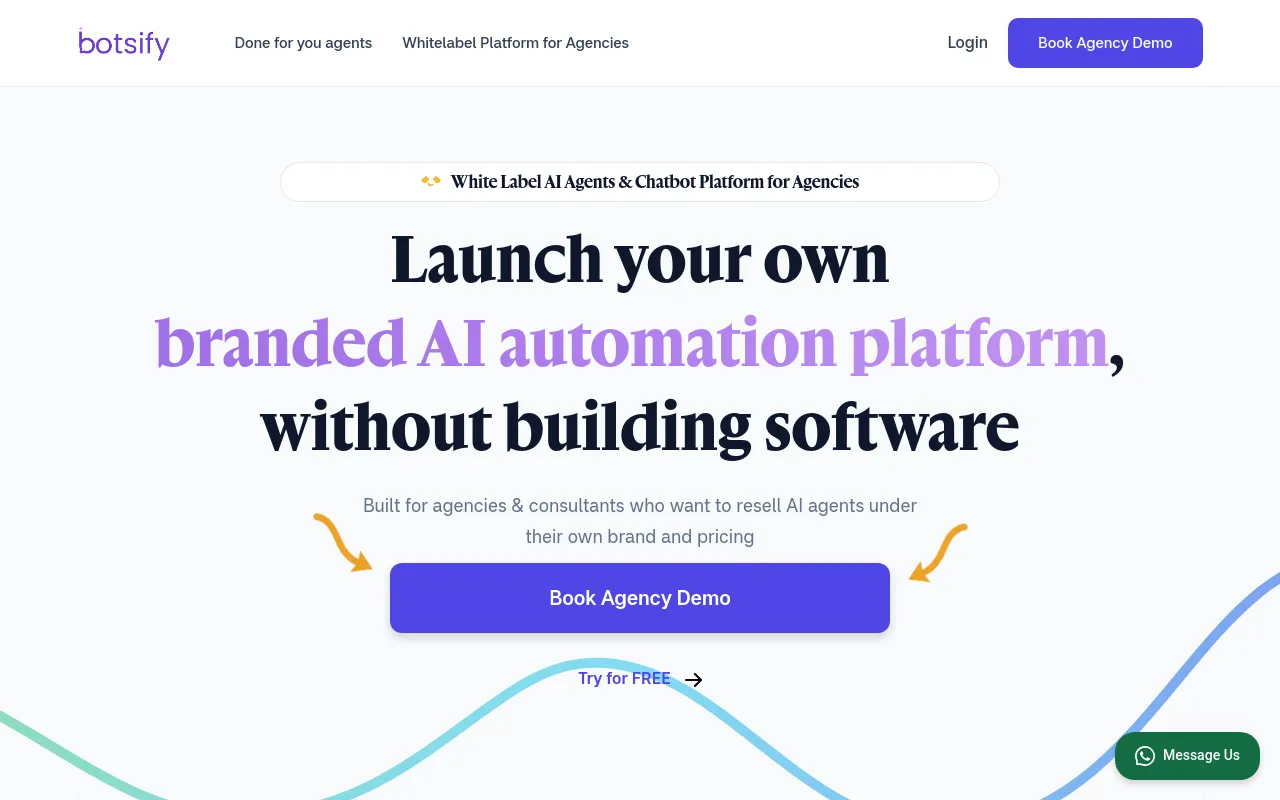
- Botsify
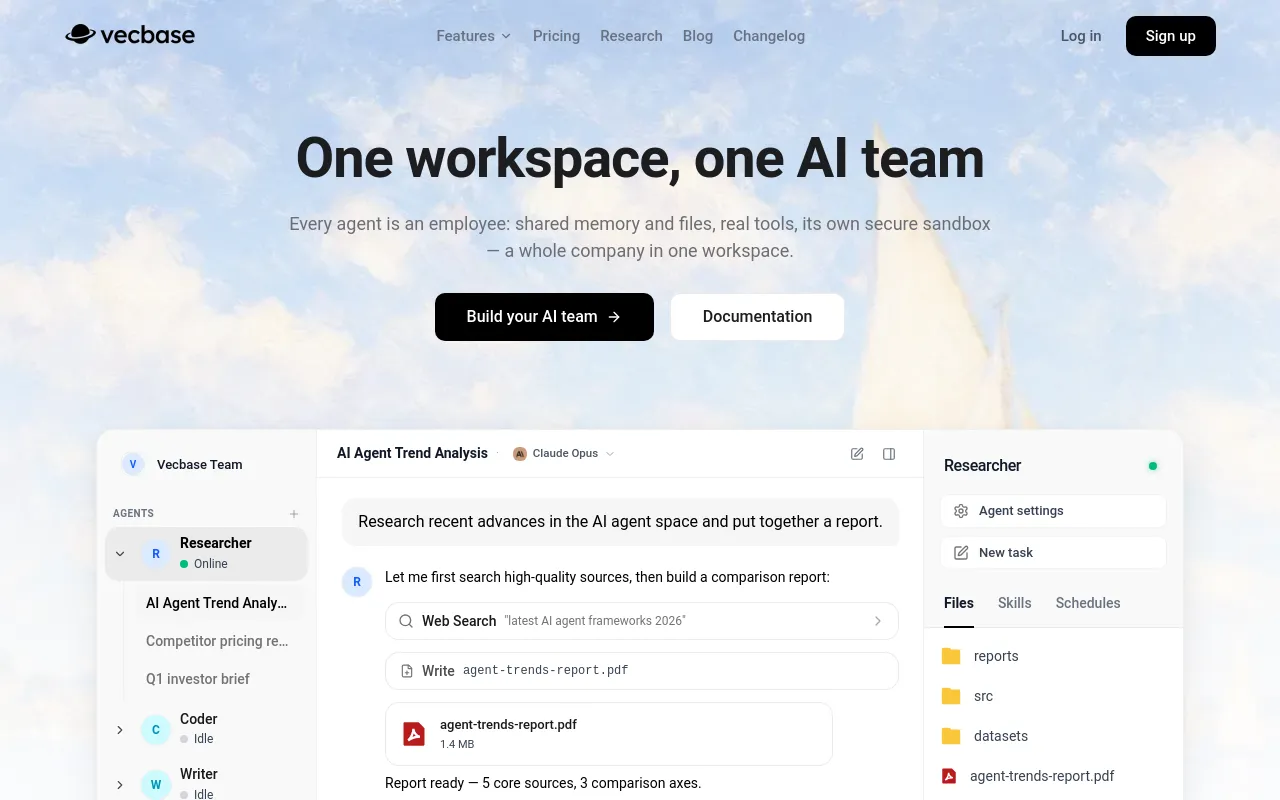
- Vecbase
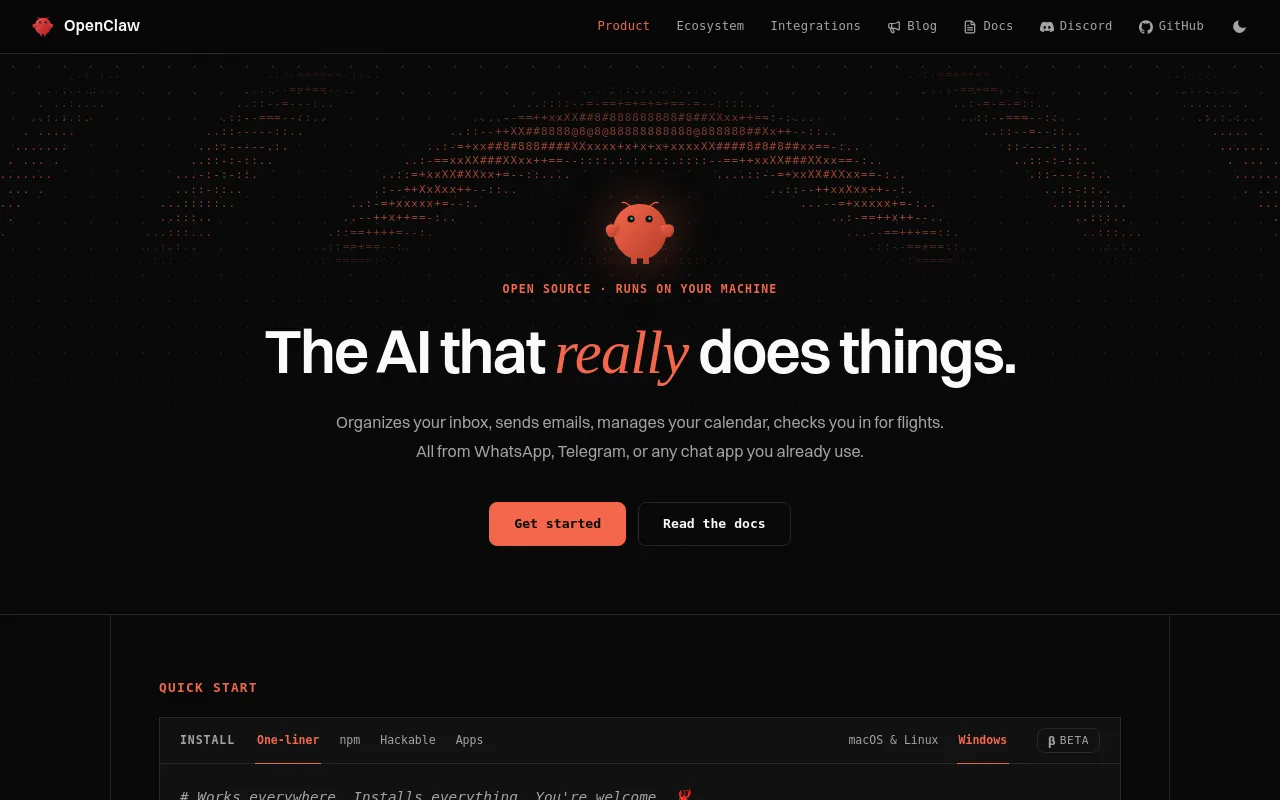
- OpenClaw
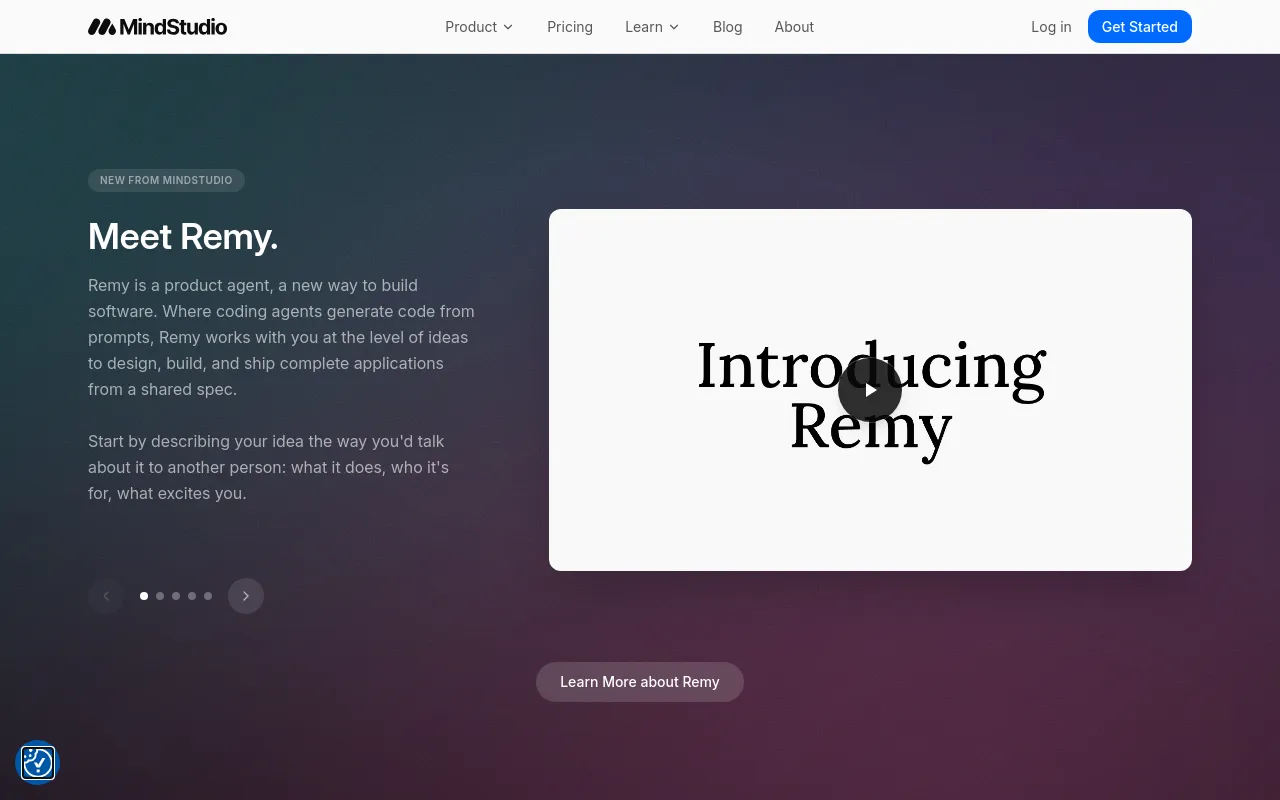
- MindStudio
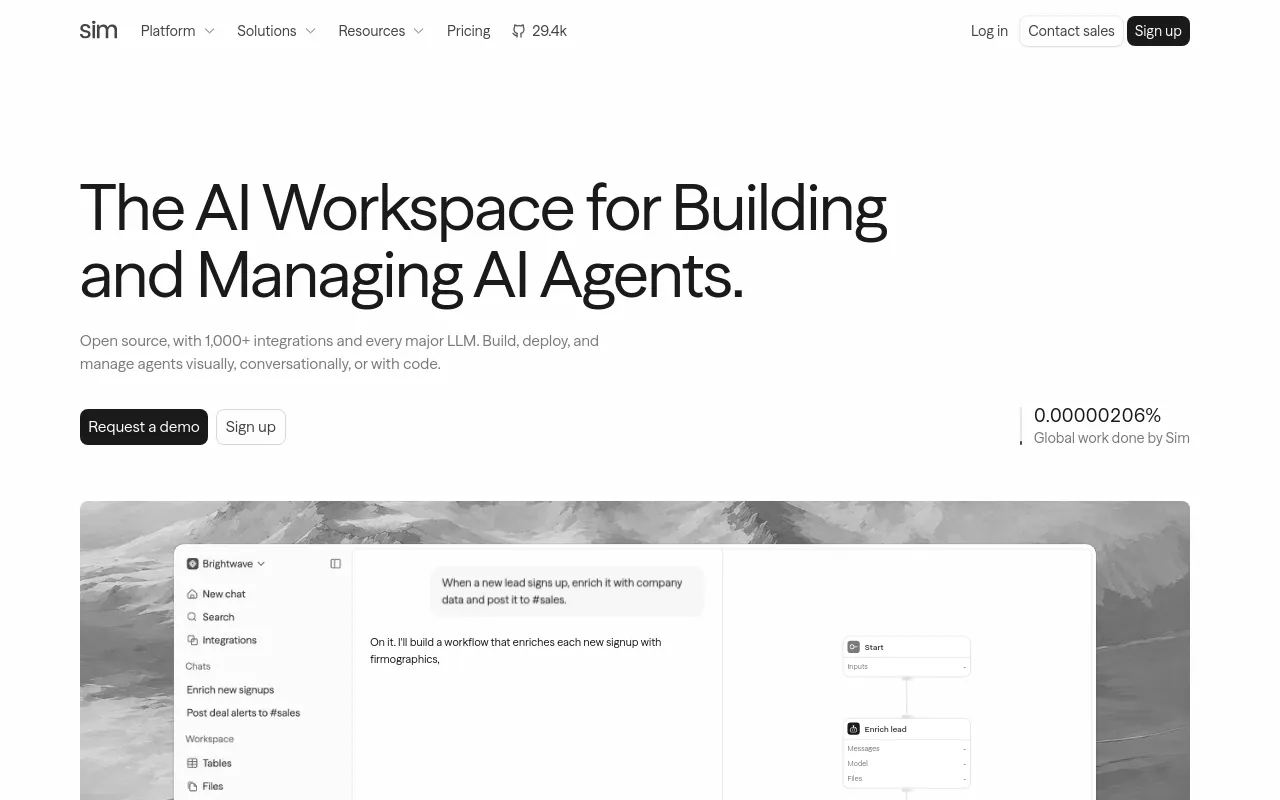
- Sim
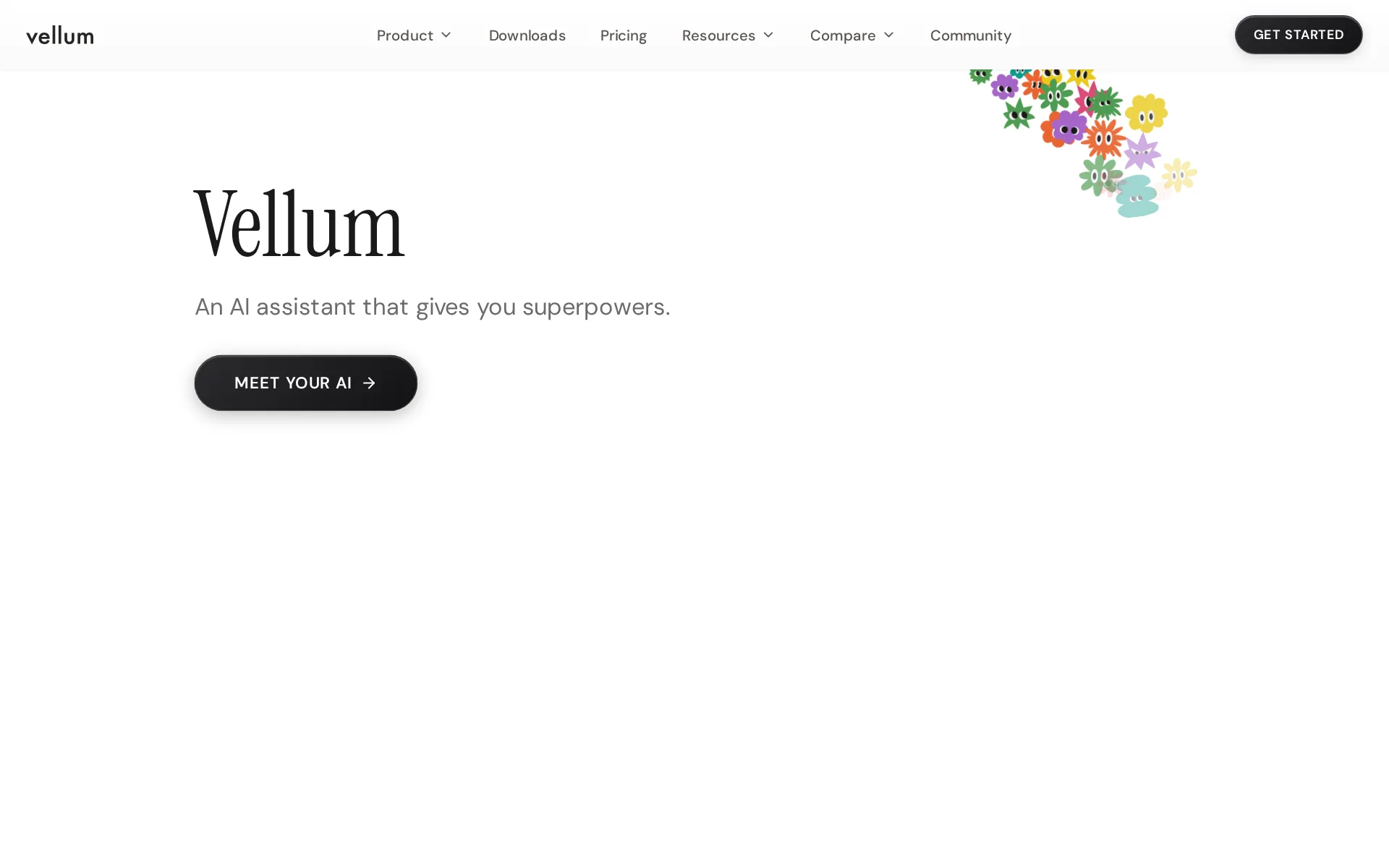
- Vellum
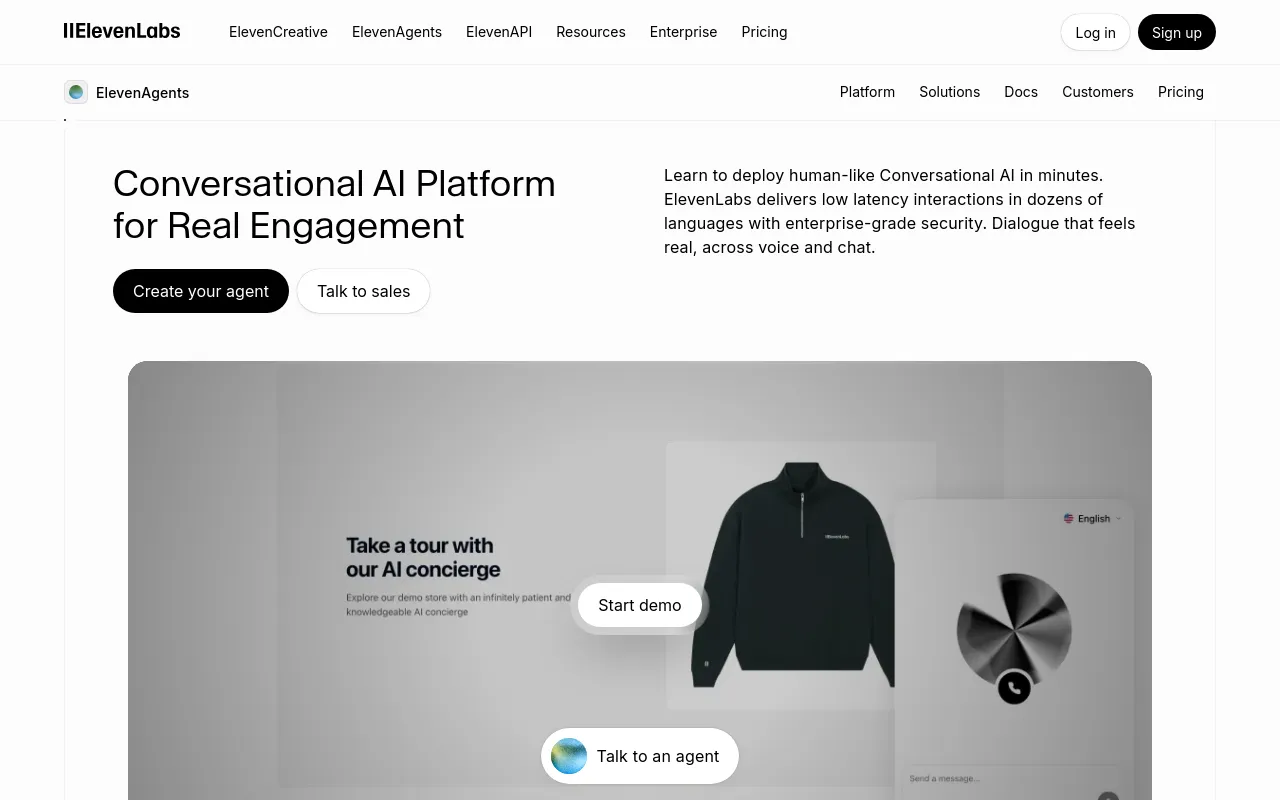
- ElevenLabs
"Agent platform" is a wide enough label that n8n, Lindy, Relevance AI, Dify, Botpress, Sierra, Salesforce Agentforce, Moveworks, Glean, Botsify and Vecbase all fit under it, and buyers researching the category often assume they're picking between flavors of the same tool. They aren't. Read their own researched listings side by side and the real split isn't features, it's who's meant to build on the platform, how much control they get in exchange for that work, and whether the platform stands alone or requires another investment underneath it. n8n, Dify and Botpress are open-source, self-hostable developer tools: you get the source, you can run it on your own infrastructure, and building an agent means wiring a visual canvas (or code) yourself, though only Botpress's MIT license is genuinely unconditional; n8n is fair-code and Dify's Apache-2.0-derived license carries added conditions. Lindy and Relevance AI are closed-source, cloud-only SaaS: you describe what you want in plain language and the vendor runs it for you, with no self-host option at any price. Sierra sits outside that line altogether: a fully-managed, sales-led enterprise platform for one job, customer support and experience agents, with no public sign-up at any tier. Salesforce Agentforce breaks the line a third way: it's a general-purpose builder, like the first four, but it only works bundled into a Salesforce CRM you must already own, with agents wired directly to live sales, service and commerce records rather than any infrastructure you choose yourself. Moveworks breaks it a fourth way: it also ships real platform infrastructure (Agent Studio, an AI Agent Marketplace), but its agents work FOR your employees, not your customers (IT, HR and finance requests, not support tickets), and as of December 2025 it's a ServiceNow-owned platform rather than an independent company. Glean breaks it a fifth way: also employee-facing like Moveworks, but its foundation is permission-aware search and a Knowledge Graph across 100+ connected systems, with agent-building layered on top rather than the starting point. Botsify breaks it a sixth way: a small, decade-old, no-code builder like Lindy, but scoped narrowly to customer-facing support, lead-gen and booking agents rather than general "AI employee" automation, sold either as a publicly-priced managed build or through a genuine agency White Label/reseller program none of the other eight offer. Which side of the build-it-yourself line you want to be on, whether you even want that choice, whether you're already locked into a CRM ecosystem, whether you're solving for customers or your own staff, and whether you want a general-purpose builder or a narrow vertical one settles most of the shortlist before a single feature comparison matters.
Five more tools have joined the corpus since the last edition and are folded into every count and table below. MindStudio and Sim are general-purpose builders in the same mould as the eleven above: MindStudio a closed, no-code workflow builder routing across 200+ models, Sim an open-source workspace pairing agent workflows with a built-in Knowledge Base and Tables. OpenClaw and Vellum break the pattern a seventh way: both are personal AI assistants, not platforms you configure for other people to use. OpenClaw is a self-hosted, MIT-licensed assistant that lives inside WhatsApp or Telegram, Vellum a persistent-memory assistant with phone and voice access, offered either hosted or self-hosted. ElevenLabs Conversational AI breaks the pattern an eighth way: it is a voice-agent layer chosen for how it sounds rather than for what you build with it, pairing ElevenLabs’ own text-to-speech and voice-cloning models with a brain you bring yourself. All sixteen are folded into the table, decision list and FAQ below.
The sixteen, at a glance
Every figure below is pulled from each tool's own researched listing, last verified 13 July–19 August 2026; n8n's, Lindy's and Dify's pricing were re-checked live before publishing (Relevance AI's public pricing page now surfaces only its Enterprise tier; see the note below the table). Sierra publishes no self-serve pricing at all; see its own row. Salesforce Agentforce's, Moveworks' and Glean's pricing were all cross-verified against independent third-party buyer-analysis sources since none of the three vendors publishes a self-serve rate card; see their own rows. Botsify's Done-for-You price is public; its separate White Label/agency tier is not; see its own row. Botpress's own pricing page returned no accessible content at verification time, so its managed-cloud figures below are third-party-sourced; see its own row. MindStudio's Individual-plan price is quoted inconsistently across sources ($16–$20/mo depending on billing cycle); see its own row. Vellum's pricing layers a platform fee, machine tier and credit bundles on top of its published packages, and independent write-ups disagree with the vendor's current tier names; see its own row.
| Platform | What it actually is | Pricing | Open-source / self-hostable? | Known for |
|---|---|---|---|---|
| n8n | Visual workflow-automation platform with native AI-agent nodes and 400+ app integrations | Free (Community, self-hosted) → €20/mo (Cloud Starter) → €50/mo (Pro) → €667/mo (Business) → custom Enterprise | Yes: fair-code, source-available, Docker self-host | Widest integration library of the sixteen; canvas can get unwieldy on deeply-branching agent logic |
| Lindy | No-code builder for event-triggered AI "employees" that automate recurring email, meeting and CRM work | No permanent free plan (7-day trial) → $49.99/mo (Plus) → $99.99/mo (Pro) → $199.99/mo (Max) → custom Enterprise | No: closed-source, cloud-only | The fastest, friendliest on-ramp to a working "AI employee"; credit-metered usage makes cost hard to predict |
| Relevance AI | No-code builder for coordinated multi-agent "workforces," with production infrastructure (evals, tracing, RBAC/SSO) | Free self-serve tier → self-serve Pro/Team tiers (published from $19–$234/mo) → custom Enterprise, though the public pricing page today foregrounds Enterprise contact-sales over the self-serve tiers | No: closed-source, cloud-only | Real production controls (LLM router, evals, RBAC/SSO) for multi-agent teams; dual-meter pricing (Actions + Vendor Credits) is easy to misjudge |
| Dify | Open-source visual platform for production LLM apps and agents, with a built-in RAG pipeline | Free (Community Edition, self-hosted) → free Sandbox (Cloud) → $590/yr (Professional) → $1,590/yr (Team) → custom Enterprise | Yes: Apache-2.0-derived (extra conditions), Docker self-host | All-in-one: workflow, RAG, agents, model management and observability in one open-source tool |
| Botpress | Open-source conversational-agent platform with bi-directional MCP support, built around one agent deployed across chat channels | Free (self-hosted MIT core) → free pay-as-you-go (Cloud, ~500 msgs/mo) → $89/mo (Plus) → $495/mo (Team) → custom Enterprise, all cloud tiers plus separate LLM "AI Spend" | Yes: genuinely MIT-licensed, no self-host caveat | The only clean, unrestricted OSI license among the platform's open-source trio; native WhatsApp/Messenger/Slack/Teams/Telegram/voice deployment from one agent |
| Sierra | Fully-managed enterprise platform that builds and operates branded customer-support agents on your behalf | Outcome-based, custom-negotiated only: you pay per resolved issue; no public pricing, no free tier, escalations to a human are free | No: closed-source, no self-host; even the Agent SDK is gated to contracted customers | End-to-end action-taking support agents (refunds, subscription changes) with $150M+ ARR and customers like SoFi, Ramp and Chime |
| Salesforce Agentforce | CRM-native platform for prebuilt and custom agents that act directly on live Salesforce sales, service and commerce data | Free Foundations (200K Flex Credits) → Flex Credits ($500/100K, mutually exclusive with Conversations) → Conversations ($2/conversation) → per-user licenses (~$5/mo) → Agentforce 1 Editions (~$550+/mo) | No: closed-source, no self-host; requires an existing Salesforce investment | Deepest CRM-native action-taking (Flows, Apex, MuleSoft) of the other fourteen; genuinely model-agnostic (GPT-5.x, Claude, Gemini) |
| Moveworks | Enterprise AI assistant that resolves EMPLOYEE (not customer) IT, HR and finance requests across 100+ connected systems | No public pricing; sales-led, headcount-based annual contract; independent buyer-report aggregation puts realistic annual spend around $50K–$270K+ | No: closed-source, no self-host; sales-led enterprise only | The deepest compliance certification list of the other fourteen (FedRAMP, SOC 2 Type 2, full ISO 27000-series, CSA STAR Level 2); now a ServiceNow subsidiary after its $2.85B acquisition closed December 2025 |
| Glean | Enterprise "Work AI" platform: permission-aware search and a Knowledge Graph across 100+ systems, with a chat assistant and no-code agent builder layered on top | No public pricing; sales-led, per-user annual contract; independent buyer-data aggregation (174 tracked purchases) puts the median deal at $98,890/yr, ranging $29,880–$208,897 | No: closed-source, no self-host; sales-led enterprise only | Search-first, not agent-first: a $7.2B valuation and MCP support shipped in both directions today, versus Moveworks' MCP still "in development" |
| Botsify | No-code builder for vertical customer-facing agents (support, lead-gen, appointment booking), built or resold by Botsify's own team rather than self-configured | $149/mo (Done-for-You); separate White Label/agency tier is custom, sales-led | No: closed-source, cloud-only; not self-hostable | Decade-old (2016), bootstrapped small vendor; the only one of the other fourteen with a genuine agency White Label/reseller program |
| Vecbase | Multi-agent workspace where agents with pre-built roles (Researcher, Coder, Writer, Operator) share memory, files and a team Drive, each running in its own sandbox | $20/mo (Plus) → $50/mo (Pro), each including that much in usage credits with metered overage; no free tier or trial | No: closed-source, cloud-only; not self-hostable | The only workspace-shaped entry among the builders; model-agnostic per token (Claude, GPT, Gemini, Kimi, DeepSeek or its own), and the cheapest managed entry price on this page |
| OpenClaw | Self-hosted, open-source personal assistant that lives inside WhatsApp or Telegram and manages email, calendar and tasks | Free (MIT-licensed, self-hosted) → hosting from ~$0.15/GB/mo (Elestio) → real-world model billing that one reviewer saw run $20–$500+/mo once direct API rates applied | Yes: genuinely MIT-licensed, self-hosted by design | 29 chat channels and 64 model providers out of the box; setup took one reviewer ~6 hours and cost can swing sharply once vendor API coverage ends |
| MindStudio | No-code visual builder routing across 200+ models and 1,000+ integrations, with roughly 200 drag-and-drop capabilities and named enterprise adoption (TikTok, Microsoft, Intel) | Free (1 agent, 1,000 runs/mo) → $16–$20/mo (Individual, quoted inconsistently across sources) → custom Business | No: closed-source SaaS; self-hosting only under custom Business contracts | Broadest out-of-the-box surface of the sixteen; at-cost model routing with no markup, but the Business tier is entirely sales-gated |
| Sim | Open-source workspace for building and deploying agent workflows, bundling a Knowledge Base, Tables and Files alongside a well-documented REST API | Free (forever) → $25/user/mo (Pro) → $100/user/mo (Max) → custom Enterprise | Partial: open-source with 29.4k GitHub stars, but self-hosting, SSO and SOC2 are gated to the Enterprise tier | Bundles structured (Tables) and unstructured (Knowledge Base) data with workflow orchestration; the vendor's own site disagrees on its integration count (244 vs. 1,000+) |
| Vellum | Persistent-memory personal assistant reachable over web, mobile, Slack, Telegram and phone calls, with permission-gated actions and an open-source self-host option | Free (Base) → $30/mo (Mighty) → $100/mo (Super) → $200/mo (Ultra) → Custom (from $50/mo) | Yes: open-source with a genuine self-hosting option, alongside the hosted packages | Explicit Allow/Deny risk-badge prompts before sensitive actions; independent sources disagree on its own pricing structure, a sign of a recently-changed offering |
| ElevenLabs Conversational AI | Voice-agent layer from the voice-model company itself, pairing 10,000+ voices and instant cloning with a bring-your-own-LLM brain | Free ($0/mo, 15 call minutes) → $6/mo (Starter) → $22/mo (Creator) → $99/mo (Pro) → $299/mo (Scale) → $990/mo (Business); over-plan minutes $0.08/min ($0.16/min in burst), with the LLM and any external telephony billed separately on top | No: closed-source, cloud-only | The most-cited voice quality of the sixteen; the separate LLM and telephony meters mean the sticker price is a floor rather than a bill |
The decision: which side of the build-it-yourself line are you on?
All sixteen carry a full researched verdict on their own listing, including who each one is explicitly not for. Read together, the honest decision tree runs on control versus convenience first, then on whether you even want a general-purpose builder, or a personal assistant instead of a builder at all:
- You want to build agentic automation visually, keep data on your own infrastructure, and connect to hundreds of existing apps → n8n. Its 400+ integrations and native AI-agent nodes mean an agent can actually go do something (call an API, update a CRM, post to Slack), and the Community edition is free to self-host. Watch out for: the fair-code licence is source-available, not OSI-approved open-source, so check the terms before reselling a self-hosted deployment commercially, and deeply branching agent logic can get hard to read on a visual canvas.
- You want a working "AI employee" running your inbox, meetings and CRM busywork today, and you don't want to touch code or infrastructure → Lindy. Event-driven agents act on real triggers such as a new email or a booked meeting, and human-in-the-loop review keeps you in control while you get comfortable. Watch out for: usage is metered in credits with a recurring theme of billing surprises in independent reviews, there's no permanent free plan, and it's closed-source and cloud-only with no self-host option at any price.
- You want to run coordinated teams of agents in production, with the evals, tracing and access controls that separate a demo from something you'd trust with live pipeline → Relevance AI. Its LLM router picks the cheapest model that still passes your quality bars, and bring-your-own-keys keeps AI spend predictable. Watch out for: the dual meter of Actions plus Vendor Credits is easy to misjudge on AI-heavy agents, the flagship Bosh BDR agent isn't self-serve, and the public pricing page now leads with "talk to sales" over its own published self-serve tiers.
- You want an open-source, self-hostable platform that folds workflow, RAG and agents into one tool, and you have the technical chops to run it → Dify. A built-in RAG pipeline plus a model-agnostic runtime (hundreds of LLMs, swappable per node) cover prototype to production without stitching five tools together. Watch out for: the licence carries extra conditions beyond pure Apache-2.0 worth checking before commercial resale, self-hosting means you own the ops burden, and the managed cloud meters usage in message credits that heavier apps will outgrow.
- You want a genuinely unrestricted open-source licence, self-hosting with no fine print, and one conversational agent deployed natively across WhatsApp, Slack, Teams, Telegram and voice → Botpress. Its MIT core carries none of n8n's fair-code or Dify's Apache-2.0-derived-with-conditions caveats, and bi-directional MCP support means it can both consume external tools and expose itself as one. Watch out for: it's explicit that it isn't a no-code tool, since independent reviews describe needing at least one developer to wire up tool calls; the LLM token cost ("AI Spend") bills separately from the plan fee and often exceeds it in production, and it's the newest and smallest by funding here ($25M Series B against n8n's and Dify's larger rounds).
- You don't want to build anything yourself; you want a vendor to design, run and improve branded customer-support agents for you, and you can commit to an enterprise engagement → Sierra. It resolves real customer issues end to end across every channel and prices on outcomes, not seats or credits. Watch out for: there is no public pricing, no free tier and no self-serve sign-up at any size, the developer-facing Agent SDK is gated to contracted customers, and it is overkill (and inaccessible) for anyone not buying a full enterprise engagement.
- You're already running your business on Salesforce CRM and want agents that act directly on live sales, service and commerce records, not just chat about them → Salesforce Agentforce. Prebuilt Service, SDR, Sales Coach and Commerce agents plus a low-code Agent Builder, genuinely model-agnostic (GPT-5.x, Claude, Gemini) and backed by a real developer surface (Agent API, Python SDK, CLI). Watch out for: pricing runs on mutually-exclusive Flex Credits or Conversations meters that have already reshaped themselves more than once, full cross-system context needs the separately-priced Data Cloud, and independent buyer reports describe multi-week pilots and multi-month rollouts, so it only makes sense if you're bringing an existing Salesforce investment to it.
- You're solving for your own EMPLOYEES, not customers: IT, HR and finance requests across 100+ systems, at a regulated enterprise that will scrutinise every compliance certification → Moveworks. The deepest certification list of the other fourteen (FedRAMP, SOC 2 Type 2, a full ISO 27000-series spread, CSA STAR Level 2) and 100+ prebuilt integrations into systems like ServiceNow, Workday and Okta. Watch out for: there's no public pricing (realistic annual spend runs roughly $50K–$270K+), a real 2-month average implementation. The fact that changes the calculus most is that it's no longer an independent company after ServiceNow's $2.85B acquisition closed in December 2025.
- Your biggest blocker is fragmented, permission-sensitive knowledge scattered across 100+ internal tools, and you want employees building their own agents on that indexed knowledge without writing code → Glean. A permission-aware Knowledge Graph underlies everything else (search, chat, agents), it ships MCP support in both directions today, and it's backed by a $7.2B valuation and customers running thousands of internally-built agents. Watch out for: pricing is entirely sales-gated (median deal near $98,890/yr), G2 reviewers flag it as genuinely expensive with a support fee near 10% of contract value on top, and it isn't a document-authoring tool in its own right.
- You want a narrow, customer-facing support/lead-gen/booking agent (not general-purpose automation), a public price, or to resell AI agents to your own clients under your own brand → Botsify. Its $149/month Done-for-You plan is the only publicly-listed price among the sales-led/managed half of this group, and its White Label program is the only genuine agency reseller offering here. A decade of operating history (founded 2016) is real, if modest, credibility versus newer entrants. Watch out for: neither tier discloses which LLM powers the agent, the White Label tier publishes no price at all, it can't be self-hosted, and its review record splits sharply by platform (G2/Capterra solid, Trustpilot weak).
- You want a workflow builder that also routes across the widest possible set of models and integrations, no-code, and don't mind sales-gated pricing at scale → MindStudio. 200+ models at cost, 1,000+ integrations and named enterprise adoption (TikTok, Microsoft, Intel, Adobe, Oracle) back a genuinely broad no-code surface. Watch out for: its own sources quote the Individual plan at both $16 and $20/mo, the free tier caps at 1,000 runs/month, and Remy, its spec-to-app builder, is still alpha.
- You want an open-source workspace that bundles structured and unstructured data (tables, a knowledge base, files) with agent workflows and a well-documented API → Sim. 29.4k GitHub stars and a genuine self-hosting option back the open-source claim, and the API's sync/async execution and cursor pagination are unusually well documented for a young product. Watch out for: self-hosting, SSO and SOC2 sit behind the Enterprise tier, so Free/Pro/Max users can't self-host, and the vendor's own site states two different integration counts.
- You want a personal AI assistant rather than a platform you configure for other people: self-hosted, MIT-licensed, and living inside chat apps you already use → OpenClaw. It's wired into 29 chat channels and 64 model providers, with a heartbeat scheduler that acts proactively rather than only on request. Watch out for: setup took one reviewer roughly six hours on a VPS, there's no built-in task-tracking dashboard, and monthly model-billing cost can swing from about $20 to $500+ once vendor API coverage ends.
- You want a personal assistant with persistent memory, phone and voice access, and visible permission checkpoints before it acts → Vellum. Its Allow/Deny risk-badge prompts on sensitive actions and open-source self-hosting option are real differentiators for anyone wary of unsupervised account access. Watch out for: pricing is layered across a platform fee, machine tier and credit bundles that independent write-ups disagree on, and it prices as a single-user package rather than a team-administered platform.
Lindy vs Relevance AI: the closest real head-to-head
Of the four general-purpose builders, Lindy and Relevance AI are the actual rivals: both are no-code, closed-source, cloud-only platforms selling "AI workforce" automation to non-developers, with no self-host option at any price. The difference is maturity and audience. Lindy optimizes for speed to a first working agent: describe an "employee" in plain language, wire a trigger and some of its 100+ integrations, and it's running your inbox or meeting notes within an afternoon, but it has no public API, so it's a closed box even for teams that outgrow the visual builder. Relevance AI optimizes for running many coordinated agents in production: it ships an LLM router, an evals framework, tracing and RBAC/SSO that Lindy doesn't offer, plus a real API and 2,000+ integrations via MCP, but that power comes with a steeper learning curve and a harder-to-predict dual-meter pricing model (Actions plus Vendor Credits, versus Lindy's simpler flat-tier-plus-credits). Pick Lindy if you want one or two agents running fast with the least setup; pick Relevance AI if you're building toward a fleet of agents that need to be monitored, evaluated and governed like production software.
Sierra: a fifth shape entirely, not a rival to the other four
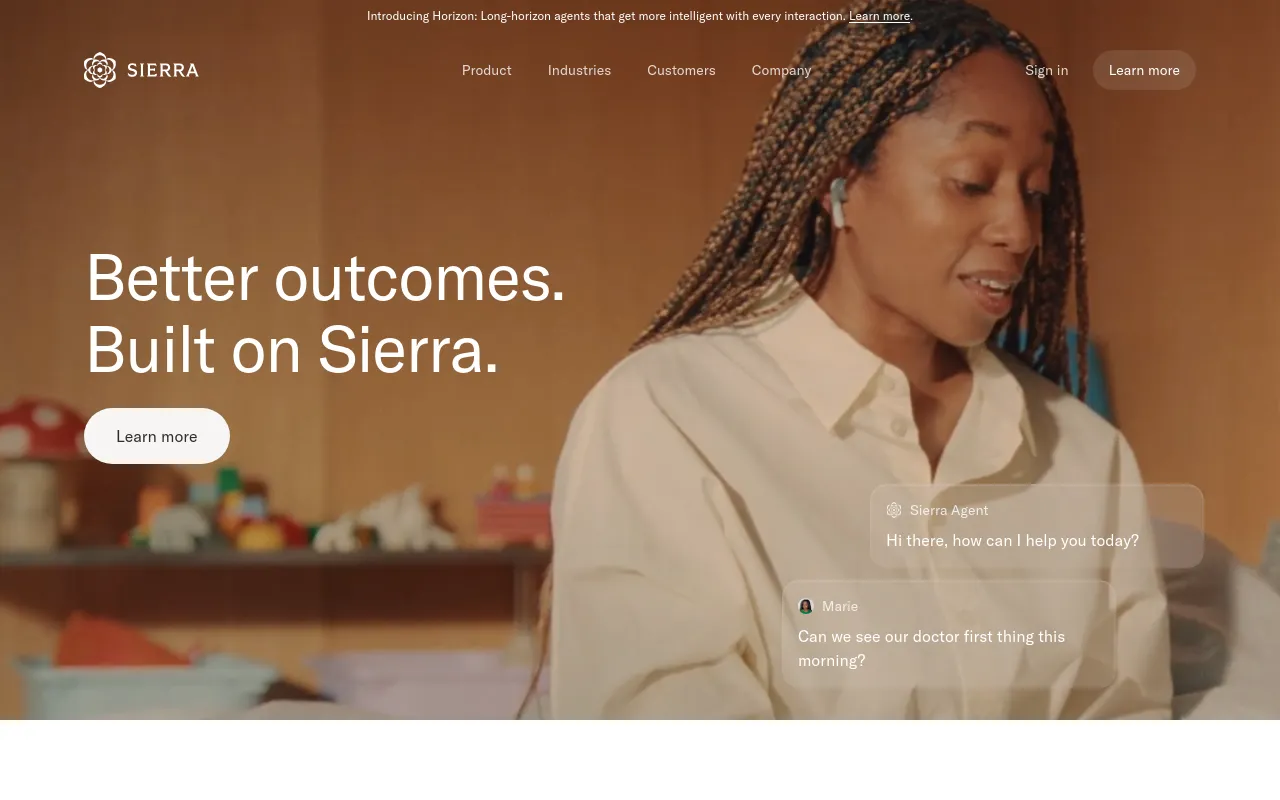
Sierra is dual-listed in this category because it genuinely is an agent platform (Agent Studio for building agents, Ghostwriter for turning SOPs into working agents, and a gated Agent SDK for developers), but it doesn't compete for the same buyer as n8n, Lindy, Relevance AI or Dify. Those four are horizontal: you can build a support bot, a sales assistant or an internal ops agent on any of them. Sierra is vertical and single-purpose: it only builds and operates customer-support and customer-experience agents, and it does so as a fully-managed service rather than a product you sign up for. There is no free tier, no published self-serve pricing and no public API access; even the Agent SDK is gated to customers who've signed an enterprise contract. In exchange, Sierra brings a level of enterprise proof none of the other four claim: $150M+ reported ARR by February 2026, named customers including SoFi, Ramp and Chime, and $1.585B raised across four rounds (most recently $950M in May 2026 at a $15B+ valuation). If you need a general-purpose platform to build agents for any job, compare n8n, Lindy, Relevance AI and Dify above. If the job is specifically outsourcing customer support to a managed AI agent and you're an enterprise buyer who can run a sales engagement, Sierra is a different, narrower shortlist; see the AI customer-support agent guide for how it stacks up against Decagon, Intercom Fin, Crescendo and Cresta on that specific job.
Salesforce Agentforce: a sixth shape, CRM-native rather than vertical
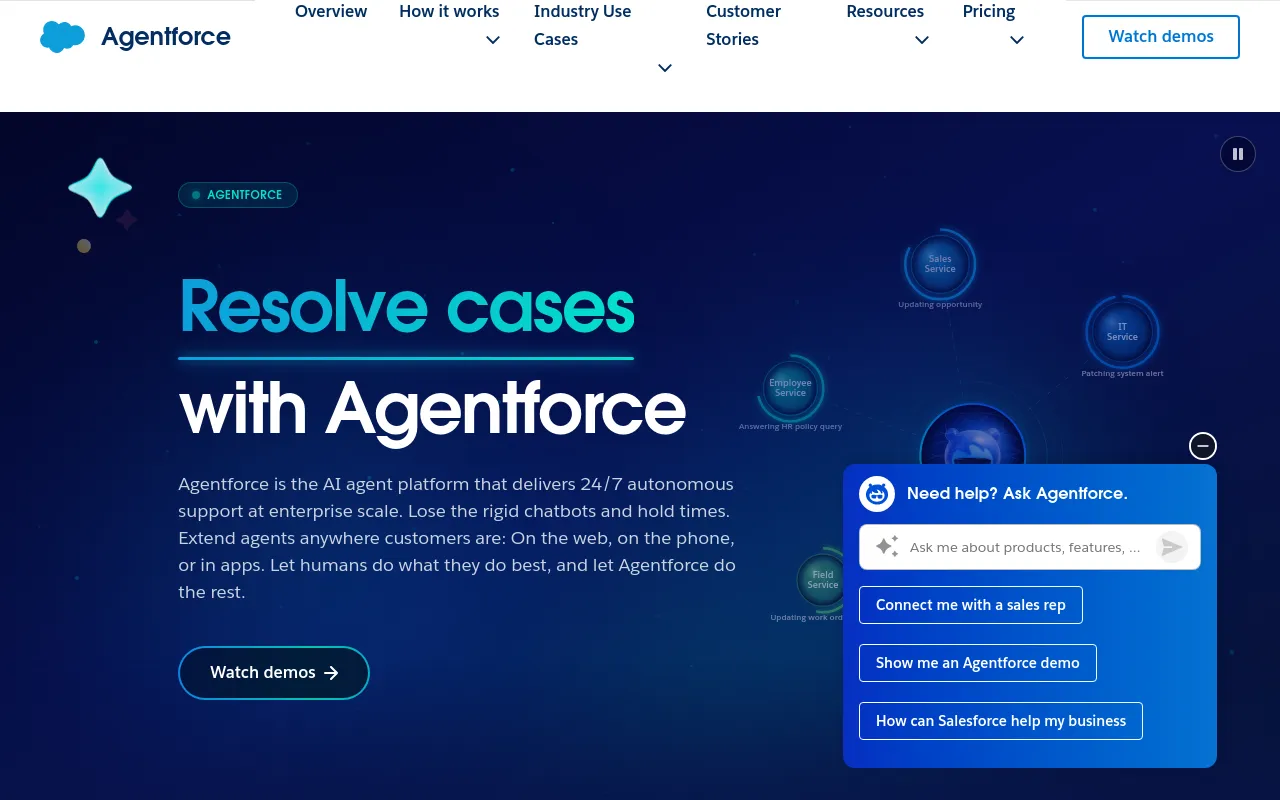
Salesforce Agentforce doesn't fit either pattern above. Unlike Sierra, it's horizontal, not vertical: prebuilt Service, SDR, Sales Coach and Commerce agents plus a low-code Agent Builder for custom ones, the same general-purpose shape as n8n, Lindy, Relevance AI and Dify. Unlike those four, though, it isn't a standalone tool you adopt on its own: every agent runs against a company's existing Salesforce data, calling Flows, Apex and MuleSoft directly against real records, which means the platform itself is worthless without the CRM investment underneath it. That CRM-nativeness is also the differentiator none of the other eight can match, since no other platform here puts agents this close to live sales, service and commerce data, and it's genuinely model-agnostic (GPT-5.x, Claude, Gemini via its own Models API) with a real developer surface (Agent API, Python SDK, CLI), unlike Sierra's gated-only access. The tradeoff is Salesforce-scale complexity: pricing runs on mutually-exclusive Flex Credits or Conversations meters that have already reshaped themselves multiple times since its October 2024 launch, full cross-system context requires the separately-priced Data Cloud (rebranded Data 360), and independent buyer reports describe multi-week pilots and multi-month production rollouts, a different order of commitment than n8n, Dify, Lindy or Relevance AI, and one that only pays off if you're already committed to Salesforce.
Moveworks: a seventh shape, employee-facing, not a builder at all
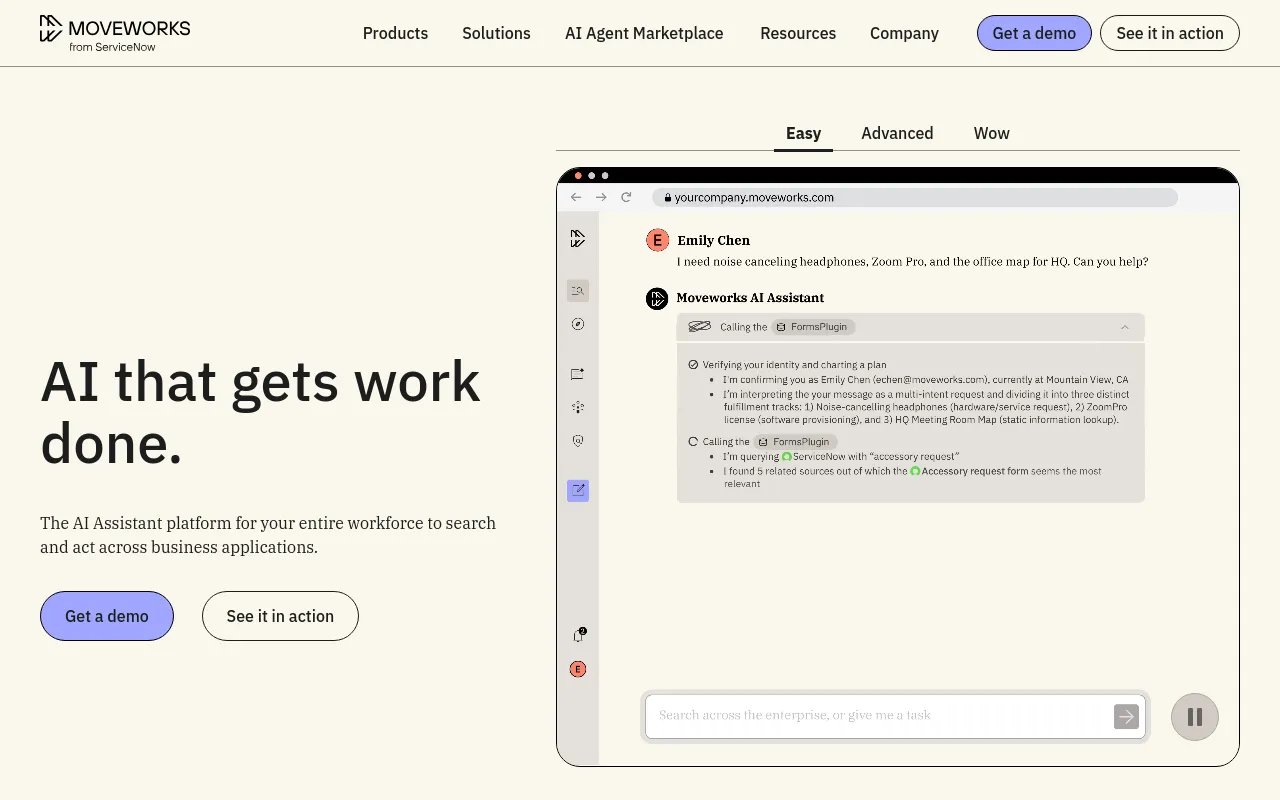
Moveworks looks like it belongs in the same conversation as Sierra and Agentforce, and it ships real platform infrastructure (Agent Studio for building custom agents, an AI Agent Marketplace of prebuilt ones). But its actual job breaks the comparison a third way. Sierra and every other support-agents listing on this site (Decagon, Intercom Fin, Crescendo, Cresta) resolve a company's CUSTOMER conversations. n8n, Lindy, Relevance AI, Dify and Agentforce all build agents that could, in principle, serve either customers or internal staff, depending on how you configure them. Moveworks and Glean are the only two platforms here built exclusively for a company's own EMPLOYEES, though they take different paths there (see below). Moveworks resolves IT tickets, HR questions, finance approvals via Slack, Teams or Google Chat, across 100+ connected systems like ServiceNow, Workday and Okta. Its compliance bar reflects that audience: FedRAMP, SOC 2 Type 2, a full ISO 27000-series spread and CSA STAR Level 2, deeper than any other platform on this page. Its ownership also changed materially in December 2025, when ServiceNow completed a $2.85B acquisition that folded it into ServiceNow's own portfolio. If your job is "build an agent for a customer-facing or general-purpose task," compare the other eight above. If your job is specifically "give employees one AI assistant across every internal system," Moveworks (and Glean, below) is a genuinely different shortlist, and worth weighing against building that experience yourself on n8n or Dify instead.
Glean: an eighth shape, also employee-facing, but search-first rather than ticket-first
Glean shares Moveworks' audience (employees, not customers) but arrives from the opposite direction. Moveworks starts from a specific job (resolve this IT ticket, this HR question) and builds outward. Glean starts from permission-aware search: it indexes 100+ connected workplace systems (Slack, Confluence, Jira, Salesforce, GitHub, Notion and more) into a Knowledge Graph that respects each user's existing access permissions, then layers Glean Assistant (chat) and Glean Agents (a no-code builder) on top of that same indexed knowledge. Zillow has built 3,400+ internal agents this way, Ericsson 2,700+. The two platforms also diverge on a concrete, checkable fact: Glean ships MCP (Model Context Protocol) support today, in both directions. It runs an MCP server exposing its own knowledge to external tools like Cursor and Claude Desktop, and an MCP host connecting 17+ preloaded remote servers. Moveworks' own blog, by contrast, still describes MCP as "developing" and "planned." Glean is also the best-funded platform on this page by a wide margin: a $7.2B valuation as of its June 2025 Series F, on more than $765M raised. Like Moveworks, there is no public pricing (independent buyer-data aggregation puts the median deal near $98,890/year), and G2 reviewers flag it as genuinely expensive with an additional support fee reported near 10% of contract value. If your job is "give employees one place to search and build agents against everything the company already knows," Glean is the shortlist; if the job is narrower and more transactional (resolve this specific IT/HR/finance request), Moveworks is the closer fit.
Botsify: a ninth shape, small, vertical, and the only one with a reseller program
Botsify looks closest to Lindy of anyone else on this page, since both are no-code, closed-source, cloud-only builders aimed at non-developers, but the resemblance is shallow. Lindy is horizontal: describe almost any recurring email, meeting or CRM job and it will automate it. Botsify is deliberately narrow: customer-facing support, lead qualification, appointment booking and workflow automation across chat channels (website, WhatsApp, Messenger, Instagram, Telegram, SMS), and nothing outside that lane. It also breaks from every other platform on this page on business model: rather than a self-serve dashboard (n8n, Dify, Lindy, Relevance AI, Salesforce Agentforce's Foundations tier) or a pure enterprise sales engagement (Sierra, Moveworks, Glean), Botsify sells a managed build, with its own team assembling the agent for a public $149/month price, alongside a genuine White Label program that lets an agency resell Botsify-built agents under its own brand, a reseller business none of the other eight platforms on this page offer at all. The other real point of difference is scale and age: Botsify is a decade-old (2016), bootstrapped, ~22-person company, tiny next to Sierra's $1.585B raised or Glean's $7.2B valuation, but with a correspondingly longer operating history than most of this group. The catches are concrete: neither Botsify tier discloses which LLM powers the agent, the White Label tier itself publishes no price at all, it can't be self-hosted like n8n or Dify, and its review record splits the same way Ada's does elsewhere on this site, solid on G2 (4.3/5) and Capterra (4.6/5) but weak on Trustpilot (2.5/5). If your job is general-purpose automation, compare the four builders above; if it's a narrow, customer-facing agent or reselling AI agents to your own clients, Botsify is a genuinely different, much smaller-scale shortlist.
Vecbase: a tenth shape, a workspace, not a builder or an assistant
Vecbase is the only entry here that is neither a builder you configure nor an assistant that answers people. It is a shared workspace: you staff it with agents from pre-built roles (Researcher, Coder, Writer, Operator) and they work alongside each other on common memory, files and a team Drive, each inside its own sandbox, with every step visible live in a chat feed and replayable afterwards. The mental model is a team you hire into a room, not a flow you draw (n8n, Dify) or a bot you deploy to a channel (Botsify, Sierra).
Two things make it genuinely distinct on this page. First, price: $20/month for Plus and $50/month for Pro make it by some distance the cheapest way onto this list. The next-cheapest managed option here is Botsify at $149/month, and the enterprise entries run into five and six figures a year. Each plan includes that much again in usage credits and then meters overage, so the headline is a floor rather than a ceiling. Second, it is model-agnostic in a way most closed platforms are not: agents run on Claude, GPT, Gemini, Kimi, DeepSeek or Vecbase's own model, billed per token, so the workspace is not a bet on one vendor's model.
The honest limits are real. Both plans cap a workspace at 10 agents, which rules out large fleets at this price. There is no free tier or trial, so evaluating it costs $20. There is no public API, so it is a place you work rather than a component you build on, the opposite of n8n or Dify. And its documentation and support are primarily in Chinese, which is a genuine accessibility constraint for an English-first team. It is also the least independently covered product on this page: our research rests on the vendor's own site plus a single third-party directory, not a broad review record, which is why we say so on its listing rather than implying a depth of evidence we do not have.
Botpress: an eleventh shape, open-source like n8n and Dify, but conversational-agent-first
Botpress belongs in the same open-source cluster as n8n and Dify (free to self-host, source you can actually read), but it started, and stays, conversational-agent-first rather than automation-first (n8n) or RAG/app-first (Dify). Its Agent Studio, native multi-channel deployment (a website widget, WhatsApp Business API, Messenger, Slack, Microsoft Teams, Telegram and Twilio voice) and bi-directional MCP support are all built around one agent that talks to people across many surfaces, not a general workflow canvas or an LLM-app platform that happens to support agents. That focus produces the cleanest license of the three: Botpress is genuinely MIT, with no fair-code carve-out like n8n and no Apache-2.0-derived added conditions like Dify. Read the actual license file rather than the marketing adjective, and Botpress is the one of the three with nothing to check. Its pricing shape is also distinct from either: a flat-published base subscription (Free self-hosted, or a managed-cloud Free/$89/$495-per-month ladder) plus separate, variable LLM token billing ("AI Spend") on top, flat and metered at once, and independent estimates put that AI Spend at $200–$1,000+/month in production, often exceeding the base plan fee itself. It's also explicit about its audience in a way n8n and Dify are more implicit about: Botpress positions itself as a developer-first, code-level-customization platform, and independent reviews describe needing at least one engineer to wire up tool calls, not a fully no-code builder the way Lindy or Botsify are. And it's the newest and smallest by funding of the open cluster: a $25M Series B (June 2025, $120M post-money valuation) against n8n's and Dify's larger rounds. That is real venture backing, but the least-capitalized of the three open-source platforms on this page. Pick Botpress over Dify if the job is specifically a conversational agent across chat channels rather than a broader RAG/LLM-app workflow; pick it over n8n if a clean, unconditional open-source licence matters more than n8n's much wider 400+ integration library; pick a closed, fully-managed platform like Lindy instead if you'd rather avoid engineering involvement altogether.
MindStudio and Sim: a twelfth and thirteenth shape, breadth versus openness, inside the builder cluster
MindStudio and Sim both joined the corpus after the eleven above, and both are general-purpose builders like n8n, Dify, Lindy or Relevance AI, but they pull the cluster in opposite directions. MindStudio bets on breadth: 200+ models behind one at-cost router, 1,000+ integrations and roughly 200 drag-and-drop capabilities, with named enterprise adoption (TikTok, Microsoft, Intel, Adobe, Oracle) backing the claim. It's closed-source SaaS, though, and self-hosting exists only under custom Business contracts. Its own published pricing is also inconsistent, with independent sources quoting the Individual plan at both $16 and $20/month. Sim goes the other direction: it joins n8n, Dify and Botpress as genuinely open-source (29.4k GitHub stars, a real self-hosting option), and bundles a Knowledge Base, Tables and Files alongside agent workflows so data doesn't need a separate tool. The catch is that Sim's own openness is tiered: self-hosting, SSO and SOC2 compliance are Enterprise-only, so Free, Pro and Max users can't actually self-host. Its site also states two different integration counts (244 versus 1,000+) that don't reconcile. Pick MindStudio if breadth of models and integrations matters more than licence purity; pick Sim if you want an open core with structured and unstructured data built in, and can live with gated enterprise controls.
OpenClaw and Vellum: a fourteenth and fifteenth shape, personal assistants, not platforms
OpenClaw and Vellum don't belong in the same comparison as the thirteen platforms above on one real axis: both are personal AI assistants you use directly, not tools you configure so other people (customers, employees) can use the result. OpenClaw is MIT-licensed and self-hosted by design, wired into 29 chat channels and 64 model providers so it lives inside WhatsApp or Telegram rather than another app, and it acts proactively via a heartbeat scheduler rather than only when messaged. The tradeoff is real operating cost: one reviewer's setup took roughly six hours on a VPS, there's no built-in task-tracking view, and their monthly bill swung from about $20 to $500+ once Anthropic stopped covering third-party API usage and billing moved to direct API rates. Vellum takes the hosted-or-self-hosted middle path: persistent memory, a broad built-in skill set (email, calendar, browsing, phone calls, coding) and explicit Allow/Deny risk-badge prompts before it touches anything sensitive, with an open-source self-hosting option for anyone who'd rather not hand a persistent-memory assistant to a vendor's cloud. Its catch is pricing clarity, not permissions: cost layers a platform fee, a machine tier and credit bundles, and independent write-ups disagree with each other and with the vendor's current Base/Mighty/Super/Ultra tier names. Neither is a fit for a team choosing infrastructure to build agents on; for that, compare the thirteen platforms above; these two are for an individual who wants an assistant, not a builder.
ElevenLabs Conversational AI: a sixteenth shape, voice-first, where the model is the product
ElevenLabs Conversational AI (branded ElevenAgents since 2026) is the one entry here you would pick for how it sounds rather than for what you build with it. Every other platform on this page treats the model layer as something you route to: MindStudio across 200+ models, OpenClaw across 64 providers, n8n and Dify across whatever you wire in. This one inverts that: it starts from the text-to-speech and voice-cloning models ElevenLabs is actually known for, 10,000+ voices with instant cloning, and leaves the reasoning to an LLM you bring yourself. The company behind it closed 2025 above $330M ARR and raised $500M at an $11B valuation in February 2026, so the agent layer is not a side project bolted onto a voice API.
Its pricing is the least comparable column in the table above, and worth reading twice. Entry is genuinely cheap, a free tier with 15 call minutes and then $6/mo, and the published ceiling looks modest at $990/mo. But minutes are the meter, over-plan minutes bill at $0.08 ($0.16 in burst), and both the LLM and any external telephony are billed separately on top. A monthly figure here is a floor, not a bill, in a way that is not true of Lindy’s seat tiers or Dify’s annual ones. It ships a REST API, so it slots underneath an orchestration layer rather than replacing one, which is the honest way to place it against the four builders above.
One pattern the four builders confirm (and where Sierra, Agentforce, Moveworks, Glean and Botsify all break it)
n8n, Lindy, Relevance AI and Dify don't split on capability: all four can wire an LLM to a set of tools and integrations and let it act. They split cleanly on licensing philosophy, and that split predicts almost everything else about them. n8n and Dify are open-source at the core (n8n: fair-code/source-available; Dify: Apache-2.0-derived with extra conditions), both Docker-self-hostable, and both aimed at technical teams willing to own infrastructure in exchange for data control and no lock-in. Lindy and Relevance AI are closed-source SaaS with zero self-host option at any tier, and both are aimed at teams that would rather pay a vendor to run the infrastructure than manage it themselves. That split even shows up in API access: n8n, Relevance AI and Dify all ship a real API or MCP surface for programmatic use, while Lindy, despite selling to the same "AI workforce" buyer as Relevance AI, has none, a real gap for any team that outgrows its visual builder. Botpress adds a further wrinkle inside the open-source cluster itself, rather than breaking the four-way split: unlike n8n's fair-code terms or Dify's Apache-2.0-derived-with-conditions licence, Botpress is genuinely, unrestrictedly MIT-licensed, the only one of the eleven original builders with no licence caveat attached to its self-hosted core at all. Sierra, Agentforce, Moveworks, Glean and Botsify all break the pattern, in five different directions: Sierra isn't self-serve SaaS at all; there's no tier at any price you can simply sign up for, closed or open, and you enter a sales process instead of choosing off a pricing page. Agentforce IS self-serve at its Foundations tier, closed-source like Lindy and Relevance AI, but uniquely dependent on an external system (Salesforce CRM) the other eight don't require. Moveworks and Glean are both sales-led like Sierra, and both share a differentiator that isn't the sales motion. It is audience: every other platform here can point its agents at customers, staff, or both; Moveworks and Glean point exclusively inward, just via different mechanisms (ticket resolution versus permission-aware search). Botsify breaks it a fifth way: it's the one platform here that is neither pure self-serve software nor a pure enterprise sales engagement, but a publicly-priced managed build, and the only one of the other fourteen sold partly as a reseller business (its White Label program) rather than solely to the end user. There's no wrong side of the builder line; it's a genuine tradeoff between control and convenience, plus now three further questions, worth deciding before comparing feature lists: whether you're willing to tie the platform to an existing CRM, whether the job is customer-facing or employee-facing, and whether you want a general-purpose builder or a narrow vertical one.
FAQ
Which of these can I self-host?
n8n, Dify, Botpress and OpenClaw all offer a free, self-hostable core, with Botpress and OpenClaw genuinely MIT-licensed with no fair-code (n8n) or added-conditions (Dify) caveat, and OpenClaw is self-hosted by design rather than as an option. Vellum also offers a genuine open-source self-hosting option alongside its hosted packages. Sim is open-source with 29.4k GitHub stars, but self-hosting itself is gated to its Enterprise tier: Free, Pro and Max users cannot self-host despite the open core. Lindy and Relevance AI are closed-source, cloud-only SaaS with no self-host option at any price. MindStudio is closed-source too, with self-hosting offered only under custom Business contracts. Sierra is also closed-source and cloud-only, delivered as a managed enterprise engagement rather than software you run yourself. Salesforce Agentforce is closed-source too, and it isn't standalone software at all; it runs inside your existing Salesforce org. Moveworks and Glean are both closed-source and cloud-only as well, each sold and deployed as a sales-led enterprise engagement. Botsify is also closed-source and cloud-only, delivered either as a managed build or through its agency White Label program.
Which is easiest for a non-technical team to start with?
Lindy: you describe an agent in plain language and get a working "AI employee" running in an afternoon, with human-in-the-loop review by default. n8n and Dify assume more technical comfort with a visual canvas (or code); Botpress goes further still, since it's explicit that it isn't a no-code tool, and independent reviews describe needing at least one developer to wire up tool calls; Relevance AI's production controls (evals, tracing, RBAC) add a real learning curve; Sierra, Moveworks and Glean aren't self-serve at all: onboarding is a sales-led enterprise engagement regardless of technical skill; Agentforce has a self-serve Foundations tier, but getting real value out of it assumes you're already running Salesforce. Botsify is arguably even easier for a non-technical team in one sense, because its own team builds the agent for you, but that also means you configure nothing yourself, and it's scoped to support/lead-gen/booking rather than general automation.
Which is built for running many agents together, not just one bot?
Relevance AI is purpose-built for multi-agent "workforces," with an LLM router, evals, tracing and RBAC/SSO for production use. n8n and Dify can chain multiple agent/workflow steps too, but neither ships the same dedicated multi-agent orchestration and governance layer. Salesforce Agentforce, Moveworks and Glean all ship multiple prebuilt/buildable agents out of the box (Agentforce: Service, SDR, Sales Coach, Commerce; Moveworks: an AI Agent Marketplace spanning IT, HR, finance and more; Glean Agents: a no-code builder that customers like Zillow have used to build 3,400+ agents), but in all three cases they're purpose-built roles inside a vendor's own ecosystem rather than a general orchestration layer you configure yourself.
Do any of these have a genuinely free, real open-source licence?
Botpress and OpenClaw both do: each carries a clean, unrestricted MIT licence across its self-hosted core, with no fair-code or added-conditions caveat attached. Neither n8n nor Dify is pure OSI-approved open source: n8n's Community edition is "fair-code" (source-available, free to self-host, but check the licence before commercial resale), and Dify's licence is Apache-2.0-derived with extra conditions on multi-tenant use and branding. Both are still free to self-host for internal use. Sim and Vellum are also open-source, but each gates part of the offering: Sim's self-hosting, SSO and SOC2 sit behind its Enterprise tier, and Vellum's open-source path is a self-hosting option alongside its hosted, paid packages, not a replacement for them. Lindy, Relevance AI, MindStudio, Sierra, Salesforce Agentforce, Moveworks, Glean, Botsify and Vecbase are all closed-source.
Which has a public API?
n8n, Relevance AI, Dify and Botpress all offer a real API (or MCP-compatible tool surface), and Botpress distinctively among this group ships bi-directional MCP support, consuming external MCP servers and exposing its own capabilities as one. MindStudio, Sim, OpenClaw and Vellum all confirm a public API too, and Sim's is unusually well documented for a young product, with explicit sync/async execution and cursor pagination. Lindy has none, only its visual no-code builder. Sierra has a developer-facing Agent SDK, but it's gated to contracted enterprise customers rather than publicly available. Salesforce Agentforce ships a real developer surface too (an Agent API, Python SDK and CLI) open to anyone with an Agentforce licence, closer to n8n/Relevance AI/Dify's directly-usable APIs than to Sierra's contract-gated one. Moveworks documents a Conversations API and a separate Data API, though, like Sierra's SDK, access runs through a contracted enterprise relationship rather than open self-serve signup. Glean ships a documented Client API plus, distinctively among this group, a live MCP server AND MCP host today, not just a REST surface. Botsify also publishes one, a REST API documented via a public Postman collection, despite selling the product itself as a managed build rather than self-serve software.
Is Glean the same thing as Moveworks?
No: both are employee-facing and both are sales-led, but the foundation differs. Moveworks starts from a specific job (resolve this IT ticket, this HR question) and builds outward. Glean starts from permission-aware search and a Knowledge Graph across 100+ connected systems, then layers a chat assistant and a no-code agent builder on top of that same indexed knowledge. Glean also ships MCP support in both directions today, where Moveworks' own blog still describes MCP as "planned."
Is Sierra really an "agent platform," or should it be compared to customer-support tools instead?
Both, honestly. That's why it's dual-listed. Sierra ships real platform infrastructure (Agent Studio, an SDK, a supervision/analytics layer), which is why it belongs on this page. But its actual job, resolving customer support conversations end to end, puts it in direct competition with Decagon, Intercom Fin, Crescendo and Cresta, not with the four general-purpose builders on this page. If your job is "build an agent for X," compare n8n, Lindy, Relevance AI and Dify. If your job is specifically "outsource customer support to an AI agent," start with the customer-support agent guide instead.
Is Salesforce Agentforce worth it if I'm not already a Salesforce customer?
Almost certainly not, and the platform doesn't pretend otherwise. Its entire value case, agents that call Flows, Apex and MuleSoft directly against live sales, service and commerce records, only exists if that CRM data already lives in Salesforce. Adopting Agentforce specifically to get an AI agent platform, without an existing Salesforce investment, means taking on the cost and complexity of a full CRM migration first; buyers in that position are better served by n8n, Dify, Lindy or Relevance AI, none of which require any particular CRM underneath them.
Is Moveworks for customer support, like Sierra?
No: this is the one distinction worth getting right before shortlisting either. Sierra (and Decagon, Intercom Fin, Crescendo, Cresta elsewhere on this site) resolve a company's CUSTOMER conversations. Moveworks resolves a company's own EMPLOYEE requests (IT, HR, finance) and never touches customer-facing support. It's also no longer an independent vendor: ServiceNow completed a $2.85B acquisition of Moveworks in December 2025, which buyer analyses expect to reshape its pricing and roadmap over time.
How is Botsify different from Lindy?
Both are no-code, closed-source, cloud-only builders for non-developers, but they solve different jobs. Lindy is horizontal: describe almost any recurring inbox, meeting or CRM task and it automates it. Botsify is narrow and customer-facing by design: support, lead qualification, appointment booking and workflow automation across chat channels, nothing broader. Botsify also sells a genuine agency White Label/reseller program Lindy doesn't offer, and has a decade of operating history (founded 2016) versus Lindy's newer, venture-backed profile.
How is Botpress different from n8n and Dify?
All three are open-source and self-hostable, but they started from different jobs. n8n started as a visual workflow-automation tool with AI-agent nodes layered on top, and its scope is any automation, not agents specifically. Dify started as an LLM-app platform with a built-in RAG pipeline, and its scope is building and shipping model-backed apps and agents generally. Botpress started, and stays, conversational-agent-first: its Studio, native multi-channel deployment (WhatsApp, Messenger, Slack, Teams, Telegram, voice) and bi-directional MCP support are all built around one agent that talks to people across many surfaces, not a general workflow or RAG canvas. Of the three, only Botpress is genuinely MIT-licensed with no fair-code (n8n) or Apache-2.0-derived-with-conditions (Dify) caveat, though it's also the newest and smallest by funding, at a $25M Series B against n8n's and Dify's larger rounds.
Are OpenClaw and Vellum really "agent platforms," or personal assistants?
Personal assistants, honestly, and they're on this page because they're tagged in the same category as the thirteen platforms above, not because they solve the same buyer problem. n8n, Dify, Lindy and the rest are tools you configure so a customer, an employee, or your own team gets the result. OpenClaw and Vellum are assistants you use yourself, day to day, inside your own chat apps and calendar. If you're choosing infrastructure to build agents that serve other people, compare the thirteen platforms above. If you want a personal assistant for your own inbox, calendar and tasks, OpenClaw (self-hosted, MIT-licensed) and Vellum (hosted or self-hosted, persistent memory) are the two to compare directly against each other, not against Botpress or Salesforce Agentforce.
Every platform above carries its own full researched listing: pricing tiers, sourced pros and cons, and a committed verdict on who it's for and who it isn't. Start with the agent platforms category for the full set.
 Captured · theagentsindex.com
 Captured · theagentsindex.com
 Captured · theagentsindex.com
 Captured · theagentsindex.com
 Captured · theagentsindex.com
 Captured · theagentsindex.com
 Captured · theagentsindex.com
 Captured · theagentsindex.com
 Captured · theagentsindex.com
 Captured · theagentsindex.com
 Captured · theagentsindex.com
 Captured · theagentsindex.com
 Captured · theagentsindex.com
 Captured · theagentsindex.com
 Captured · theagentsindex.com
 Captured · theagentsindex.com
Frequently asked questions
Which of these can I self-host?
Which is easiest for a non-technical team to start with?
Which is built for running many agents together, not just one bot?
Do any of these have a genuinely free, real open-source licence?
Which has a public API?
Is Glean the same thing as Moveworks?
Is Sierra really an "agent platform," or should it be compared to customer-support tools instead?
Is Salesforce Agentforce worth it if I'm not already a Salesforce customer?
Is Moveworks for customer support, like Sierra?
How is Botsify different from Lindy?
How is Botpress different from n8n and Dify?
Are OpenClaw and Vellum really "agent platforms," or personal assistants?
Advertise here
Reach buyers mid-decision. Reach builders choosing their next agent. Promote your brand with a display placement or bring your listing into focus with Featured.
Explore owner options →Advertise on this page →The digestFree
Which agents actually ship.
What we re-checked, what got added, and one number from the index. Tuesdays.
One-click unsubscribe